











September 6 Monday
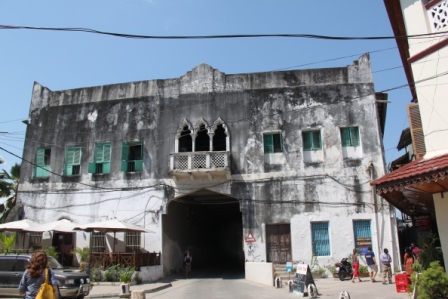
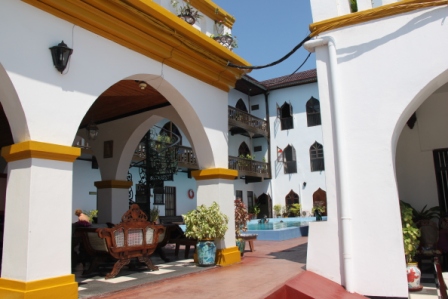
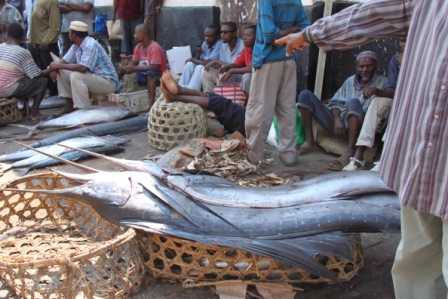
Off to a new adventure, we boarded the plane for Zanzibar, an island off the coast of Tanzania that thrives on tourism. It was not a good start when no one met us at the airport. But cabs were handy and we negotiated a rate and headed in to Stone Town. Ten minutes later we arrive at the Tembo House Hotel to discover that the hotel was not expecting us. So while Julie C. got the scoop on the town from our cabbie, Ali, I made phone calls and sent emails to straighten everything out. We ended up with quaint rooms furnished in African and Swahili antiques in the oldest hotel in town. Now hungry we started out to walk and find food. However it was Ramadan and most restaurants are closed till Sundown unless it is in a hotel or a non-Muslim run establishment. We settled in an Indian restaurant on the third floor overlooking town and had a delicious meal at little cost. We then walked the crooked streets of town till we found the local market. The market was fascinating with plenty of fish, fruits and hoards of people. We continued our walk thinking we were headed toward our hotel but since there is no order to the layout of streets we walked instead to the Peace Memorial Museum and a football park where cows were grazing. At that point we could see the water, found the museum on a map and triangulated our position. We headed now toward the hotel stopping to talk to a guard who advised us that we had a long, long way to go. Ten minutes later we were at the front door of the hotel. Distance is all relative depending on whom you talk to. Tembo House is in the heart of Stone Town with the beach on the back side of the hotel. It was formerly the American Consulate in the 1800’s.
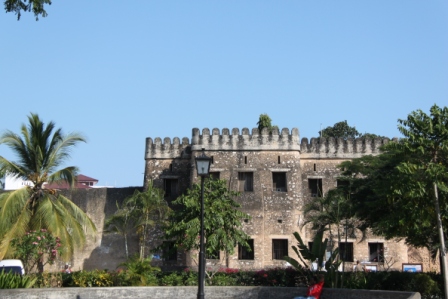
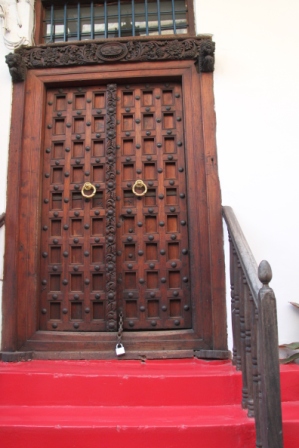
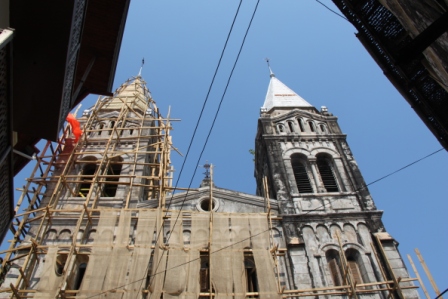
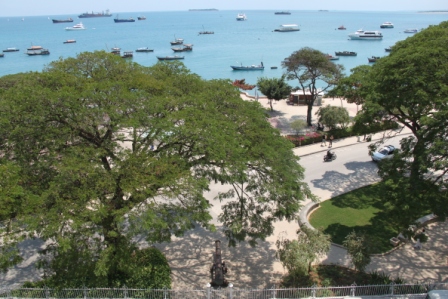
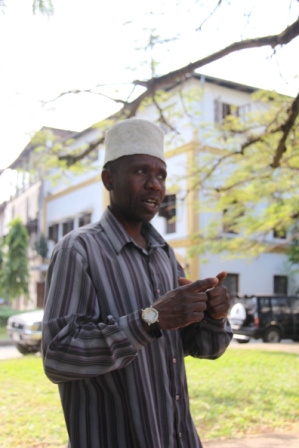
We had a wonderful breakfast this Tuesday morning at the Tembo House including fresh coconuts with milk, several breads, eggs of all types, and fruits. We met Talib, our guide, who would give us a 2 hour walking tour of Old Stone Town over the next 3 ½ hours. Old Stone Town is 3 kilometers big with 30,000 thousand residents while there are 1 million residents on the entire island. There is no poverty or food shortage but ample space and food for everyone. There are no property taxes or personal taxes for the residents. Only large business and industries are taxed. We discovered the beautifully crafted brass studded square and round doors of the town. We saw the last slave market sight, the House of Wonders (which dominated the skyline), mosques, Tippu Tip’s house (famous Arab slaver), the Old Fort (which now houses an amphitheater and artists) and the Dhow Palace (now restored to a hotel). We walked the waterfront and saw the Forodhani Gardens (favorite gathering place at dusk for locals and food sellers). The House of Wonders was once the tallest building in all of Africa is topped by a large clock tower. It was the first building to have electricity and to have an elevator. Today it is the National Museum and the front entrance is flanked by large cannons from Portugal. We also saw the home of the late Freddie Mercury (lead rock singer for the band Queen) the most internationally renowned Zanzibarian. Tourism is a huge industry in Zanzibar dominating spice production and exportation. Most of the hotel staff and restaurant waiters attend hotel school, learning the art of hotelier and 5or 6 languages. Twenty percent of the tourists are Italian.
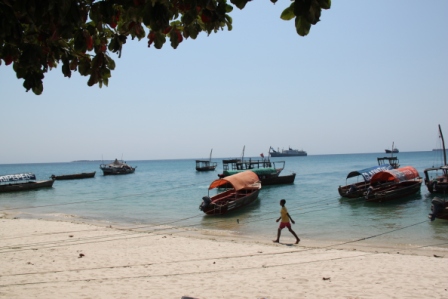
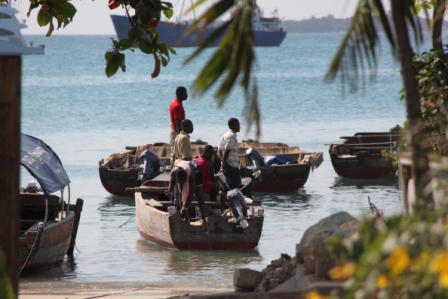
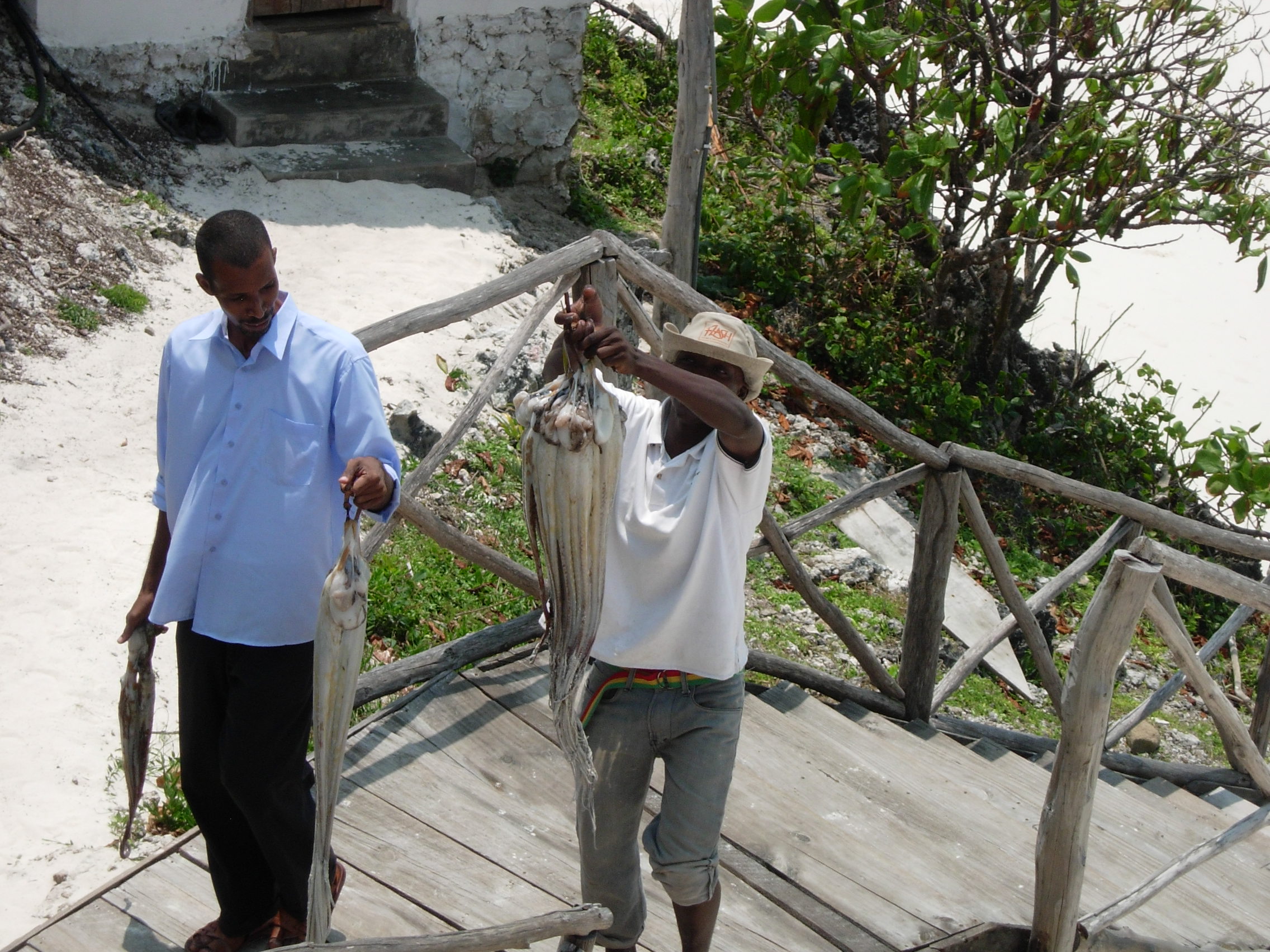
We returned to the hotel for a lunch at the water’s edge, watching the fishing dhows come ashore and selling their catch. They sold fish and octopus to the hotel chef as we watched!
The afternoon found us again on a tour as we headed toward our beach resort. We stopped at Mr. K’s Spice Farm. As various rulers came and went at one point one ruler dispersed 3 acres farm plots to the locals and that is now Mr. K’s. Here our guide and 2 local boys walked us through the farm. It is a true mingling of a variety of crops: cinnamon, cardamom, vanilla, nutmeg, cloves, ginger, turmeric, black & white pepper, chili, cumin, lemon grass, mustard seeds, coconuts, oranges and bananas. We did war paint and lipstick with the berries from the Rangiyamdomo tree (or the lipstick tree).The boys wove us baskets to put our spices in, gave us a fruit tasting, climbed a palm tree to get fresh coconut and entertained us with stories of the spices.
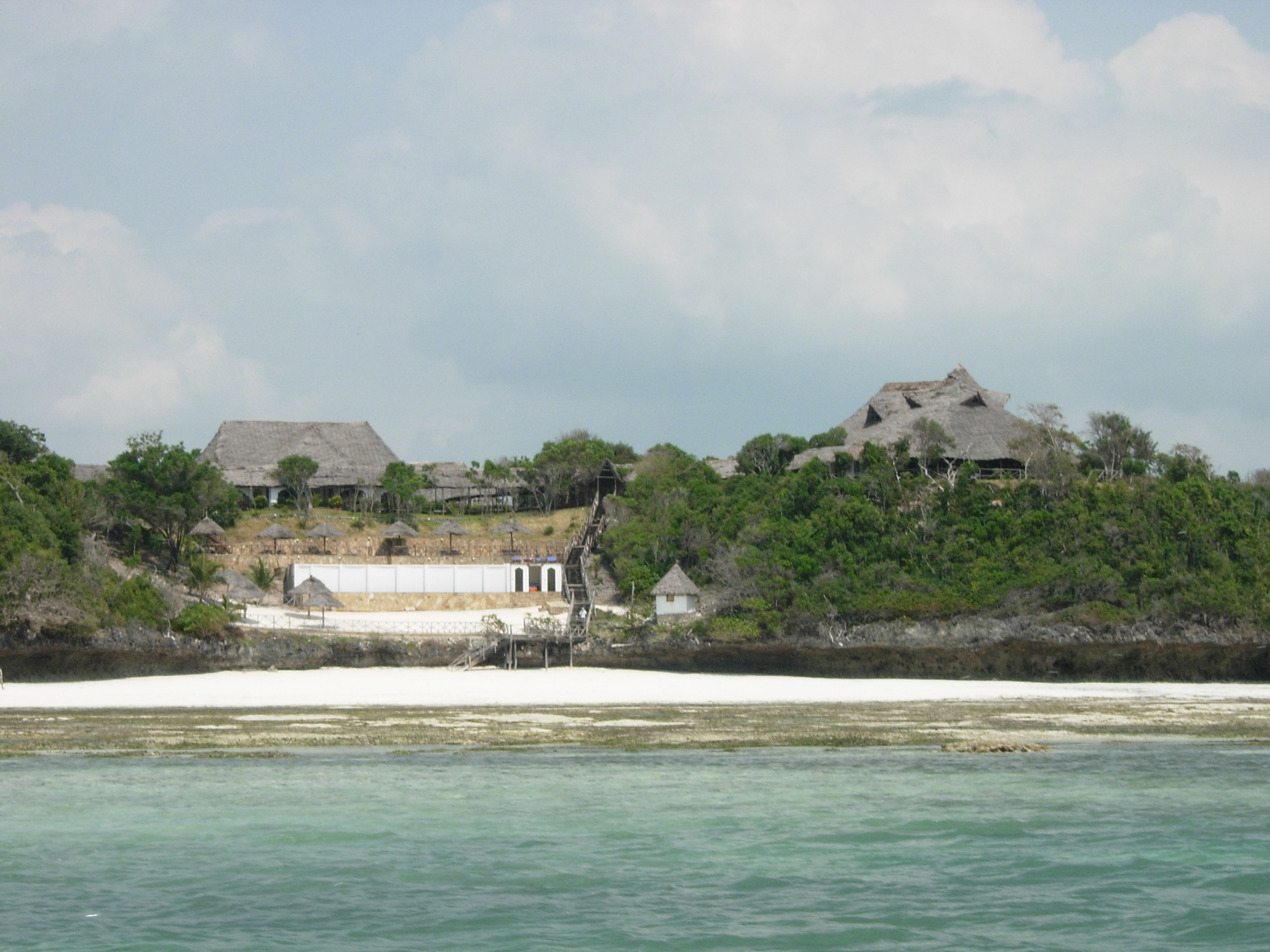
We headed down the road to the end of a long peninsula to the Ras Michamvi Beach Resort. Here atop a cliff overlooking the Indian Ocean is a bit of heaven: white powder sand beaches and turquoise seas, a large ocean front swimming pool, hiking trails to the beaches and local red colobus monkeys. Four bungalows have 15 rooms with a large open makuti thatched pavilion housing a restaurant, bar, and internet. There is reliable power, air conditioning in each room, antique Swahili beds and a wonderful Arabian style bathroom. There is even a gym and pool table! There are few hotels in this area and quiet is guaranteed.
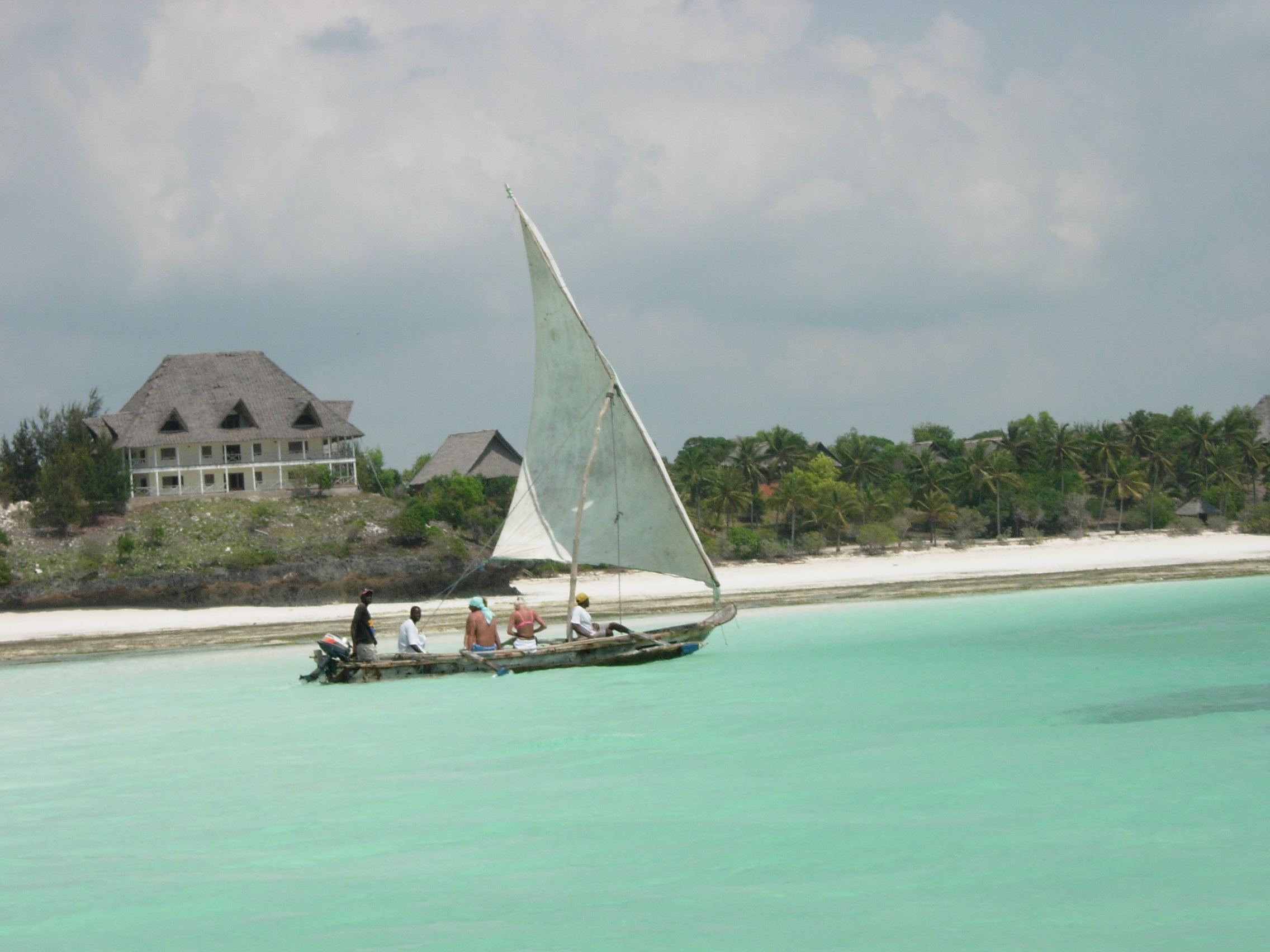
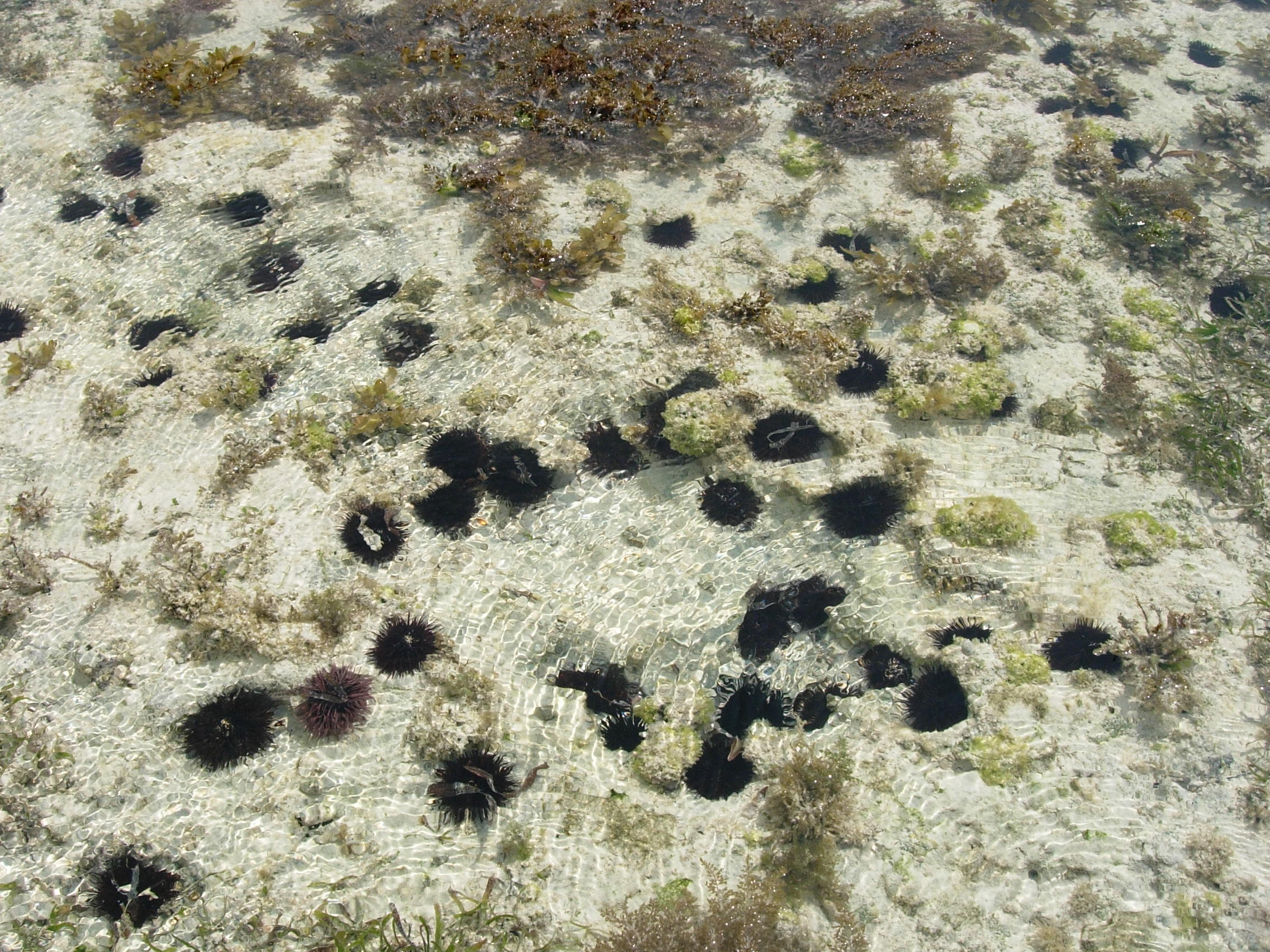
After sleeping in and a leisurely breakfast, Pam, AJ and I picked up snorkel gear and headed to the beach to a waiting Dhow. Julie C elected to relax in the sun at the pool. We rode 15 minutes or so to a heavy concentration of the coral reef that is off shore and went looking for colorful fish and there were plenty! The water was crystal clear and you could see down forever. We saw every color of fish there is including one with pink strips, several varieties of angel fish, parrot fish, Coney fish, sea amenities, coral (small and delicate and large and massive) and even several small barracuda. There were plenty of sea grasses which are now farmed and exported. As it was Ramadan, our boat captain was unable to dive/snorkel with us. He regaled us about all the fish we missed swimming by the boat as we were off on the reef including a large black octopus. We had a late lunch and were going to explore the beaches but the tide rolled in leaving no beach to be seen so we headed to the pool to sunbath. Dinner was freshly caught king fish and octopus.
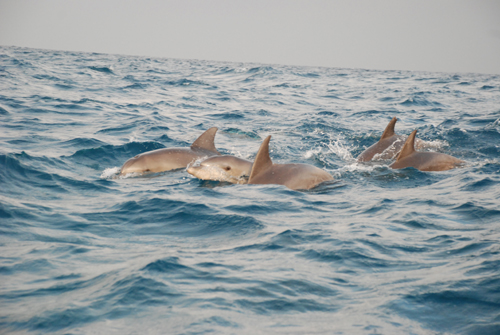
Up early at 5am Thursday we were off to Kizimkazi Beach where the dolphins are known to be seen. We are going dolphin diving and our hotel manager Romina is accompanying us to take pictures. We got in a large Dhow and headed for the open ocean, the sun is barely up. But there are 4-5 other boats doing the same. After 20 minutes we spot a large family of dolphins…it is time to put on the snorkel and fins and jump overboard. The dolphins are under you and all around. One is not allowed to touch them but it is a wonderful sight to observe as the bottlenose dolphins swim and dive and frolic. Pam and AJ were the bravest in this venture and dove in 2 & 3 times. The seas were 2-3 foot and really rough but that did not stop the dolphins. After an hour we headed back to shore for a box breakfast of jam sandwiches, juice and bananas.

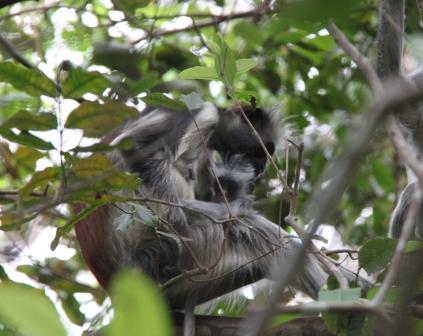
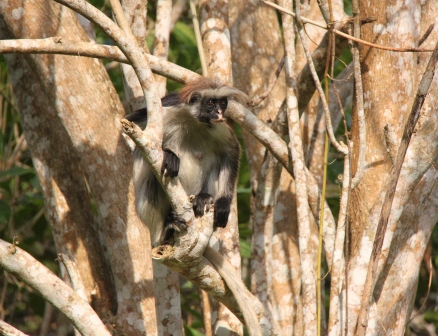
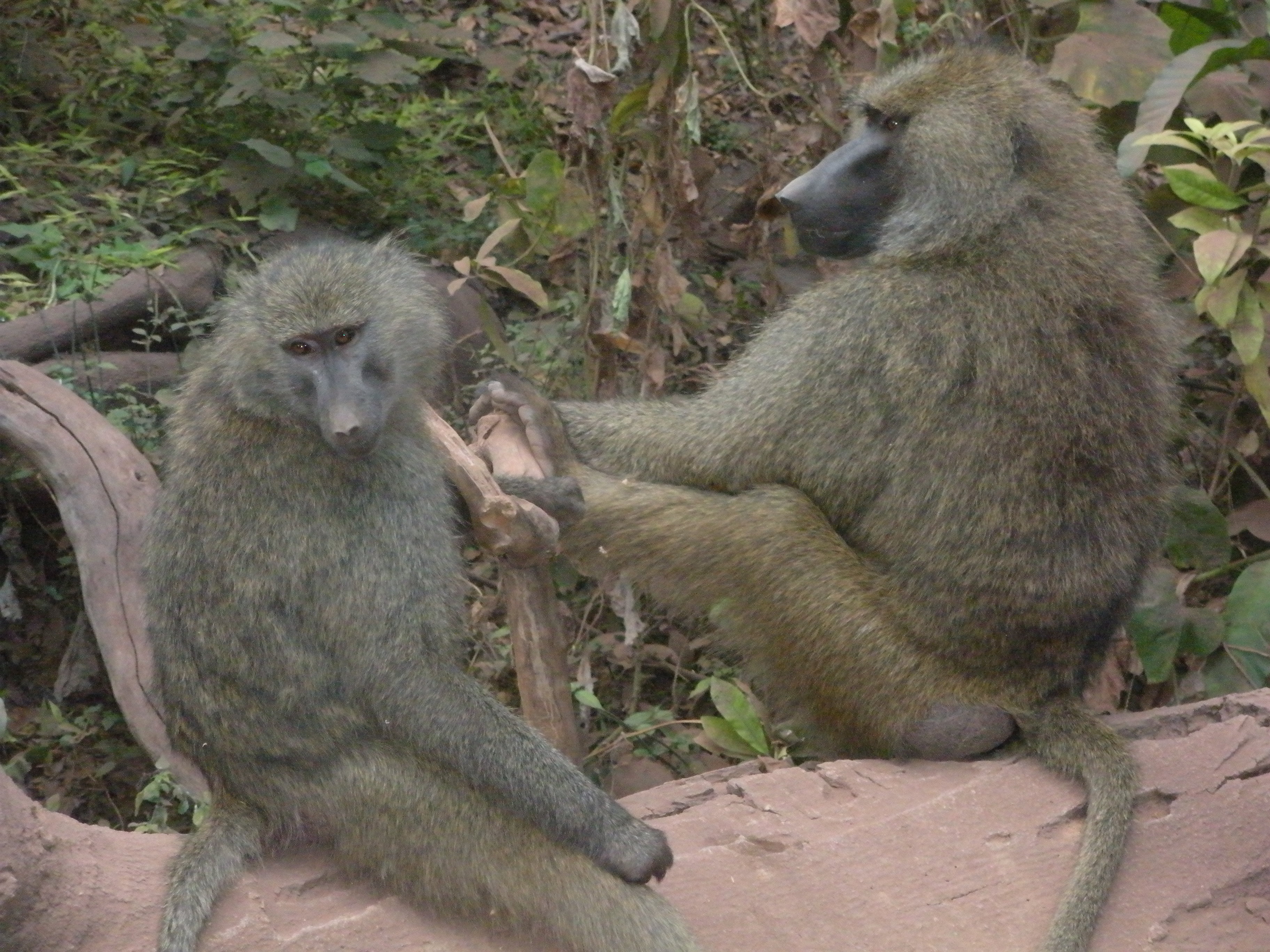
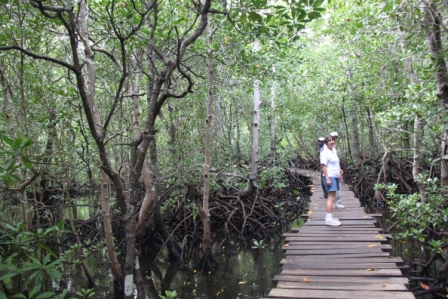
Then we were off to the Jozani Forest. We wanted to get there early morning as it is the best time to spot the monkeys. Fifty years ago the government named this area a forest and have since protected the monkeys and the trees here preserving the forest and reestablishing the forest in an area that had been nearly deforested. Here is now a “Natural Forest”, a “Tropical Forest “(much wetter area), and a “Mangrove Forest”. We immediately saw the Red Colobus monkey unique to Zanzibar as it has no whiskers frolicking around the main entrance area. We saw fresh water crabs, and giant red mahogany trees which provide food for the monkeys. We also saw the world’s smallest frogs and safari ants! There are civet cats and the endangered Zanzibar leopards existing in the forest but rarely seen. We saw Strangler Fig trees which strangle the healthy Sycamore Fig Tree. We walked a board walk through the Mangrove Forest and our hotel manager Romina climbed out on the roots of these trees. Our ranger has been working in the forest for 13 years and spots animals long before we do! We even saw a bush anteater. As we exited the forest we saw the Blue Monkeys.
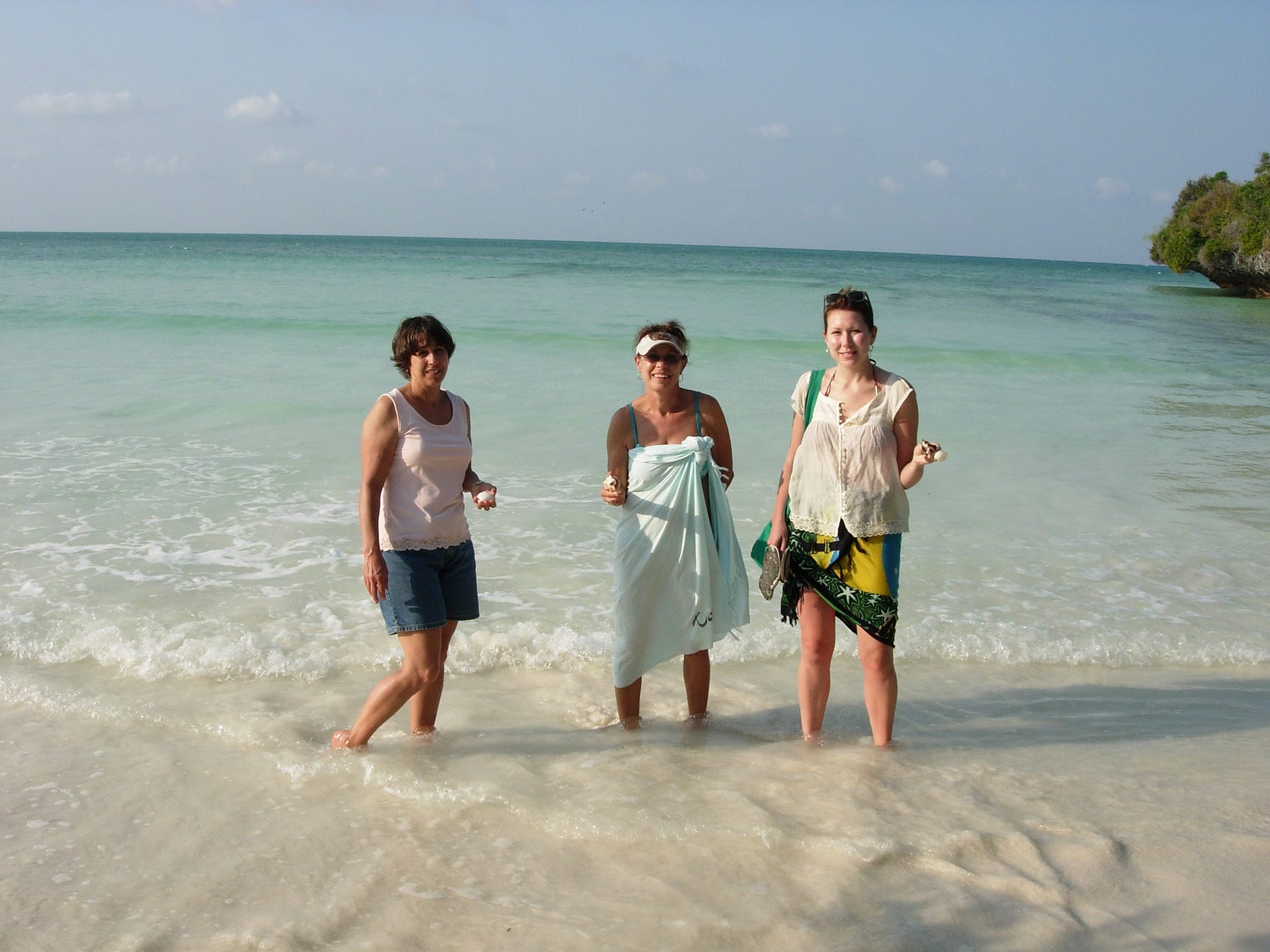
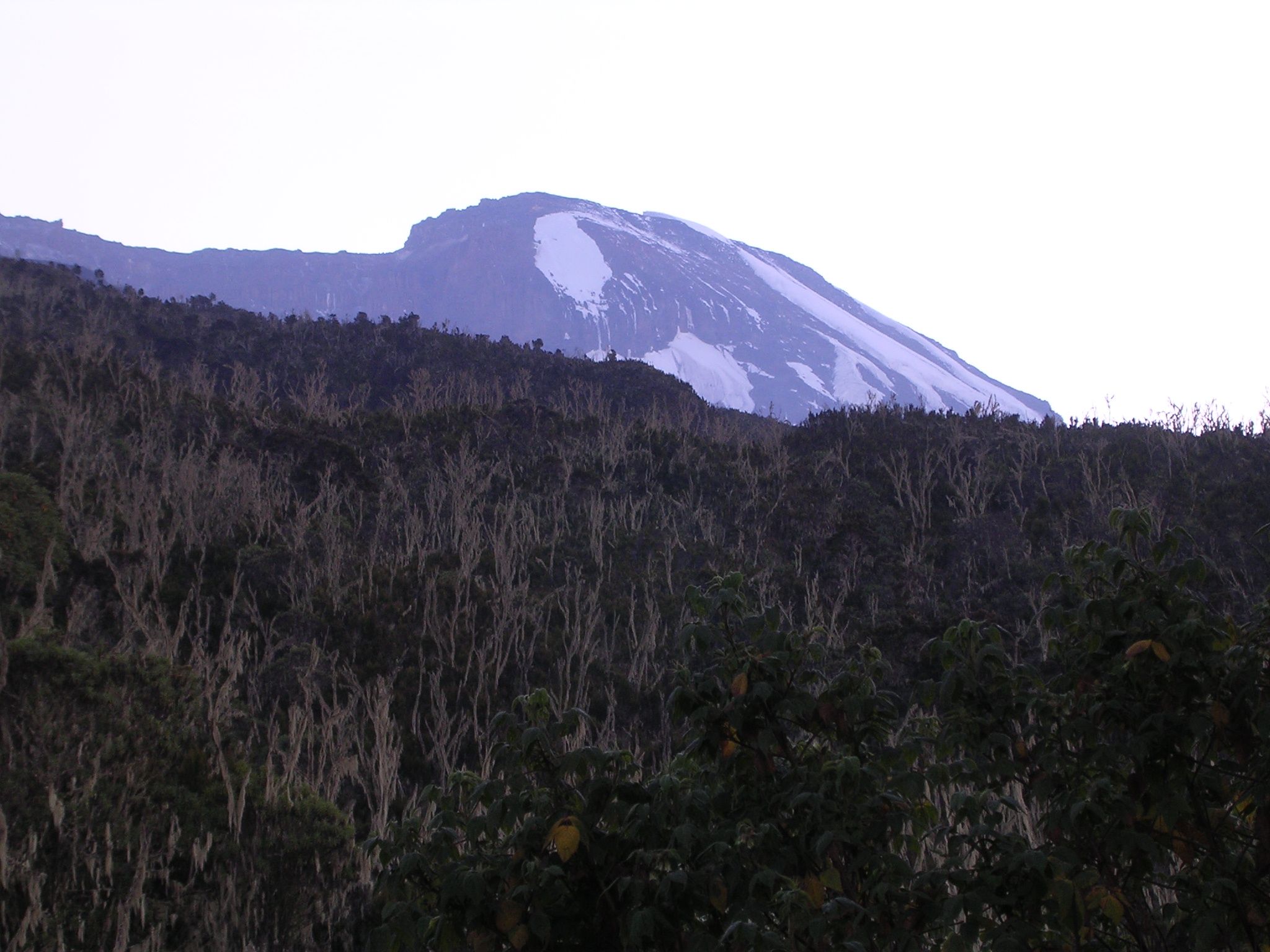
We walked the beaches Friday hunting shells and beach glass. We did not collect any glass as it was all new glass, sharp edges and clear, not worn yet by the sand. We have packed our bags and head to the airport at Kiembe outside Zanzibar Town. We are flying to Dar es Salaam in order to reach Mt Kilimanjaro. We are anxious to see if the whole team made it up the mountain. During our adventure we have met several groups of climbers of which many did not make it up the mountain. None of us can predict how the team did. As we leave Ras Michamvi Beach Resort we are informed our flight has been canceled so we rush to the airport. The first leg of our flight is leaving in 20 minutes to Dar es Salaam so we board and will deal with the next flight after we arrive in Dar es Salaam. The problem is we are traveling on the end of Ramadan and today is the first day the Muslims can eat…it is a national holiday which has changed all the flight schedules in the airport as this is a predominately Muslim area. At Dar es Salaam we wait for a later flight hoping that it goes off on time and that we get to the Springlands Hotel where the climbers are to celebrate with the team. We have run into some climbers that arrived on the same plane we did and are now sharing their Mt. Kili and Zanzibar experiences with us.
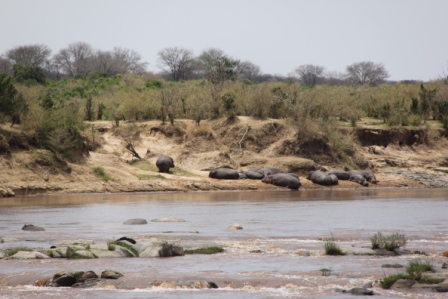
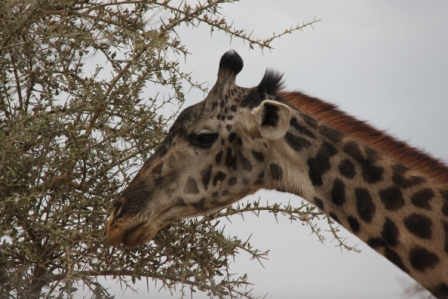
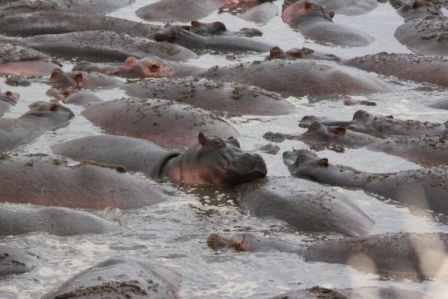
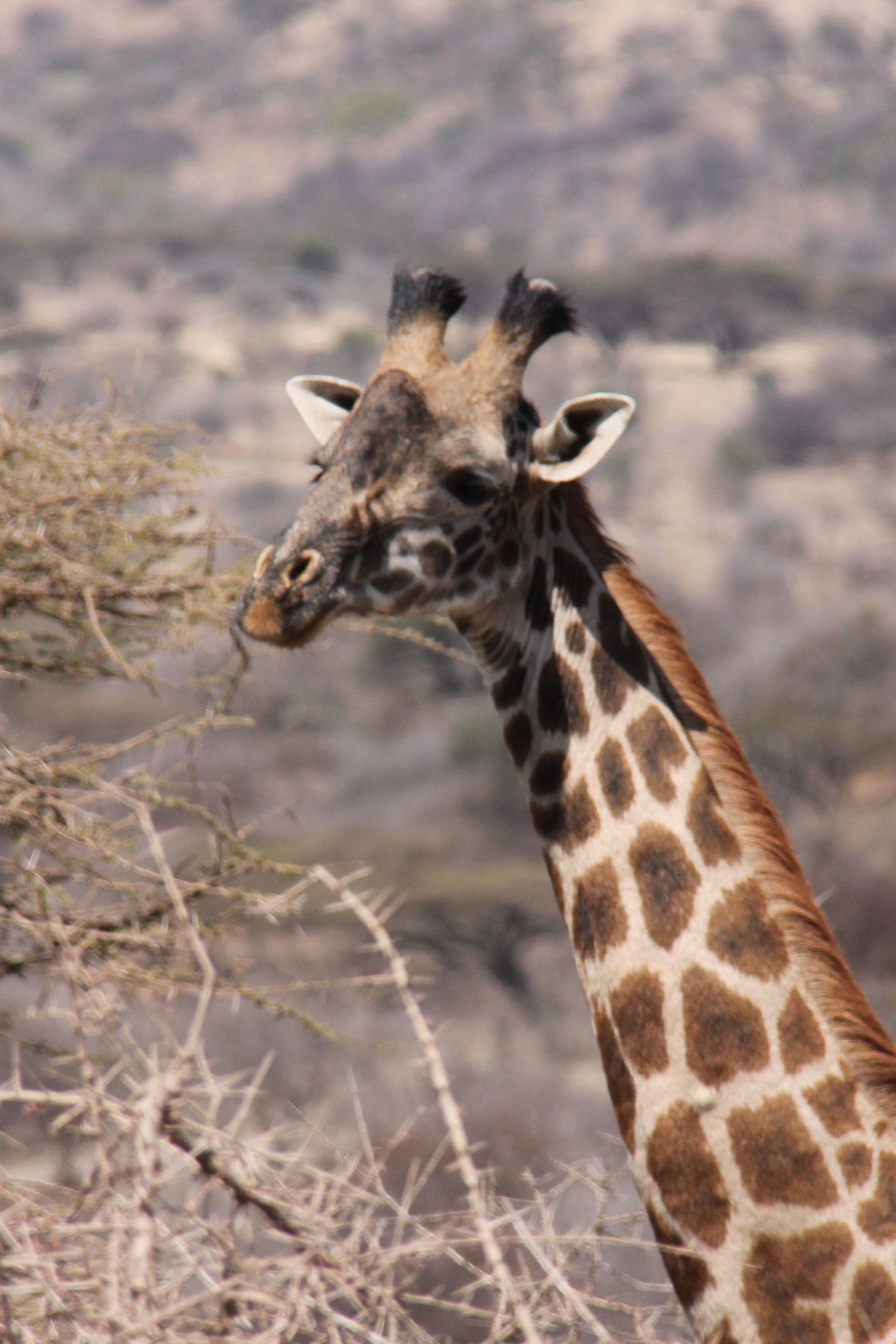
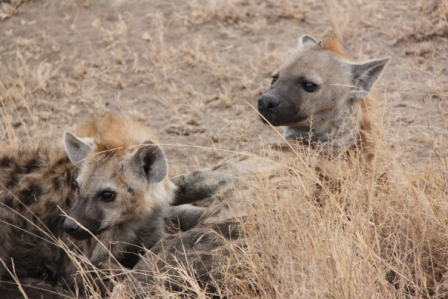
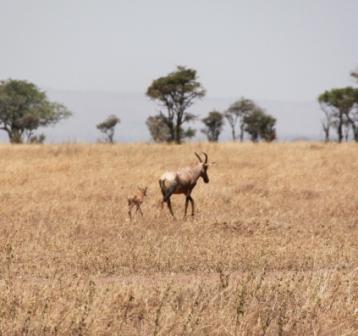
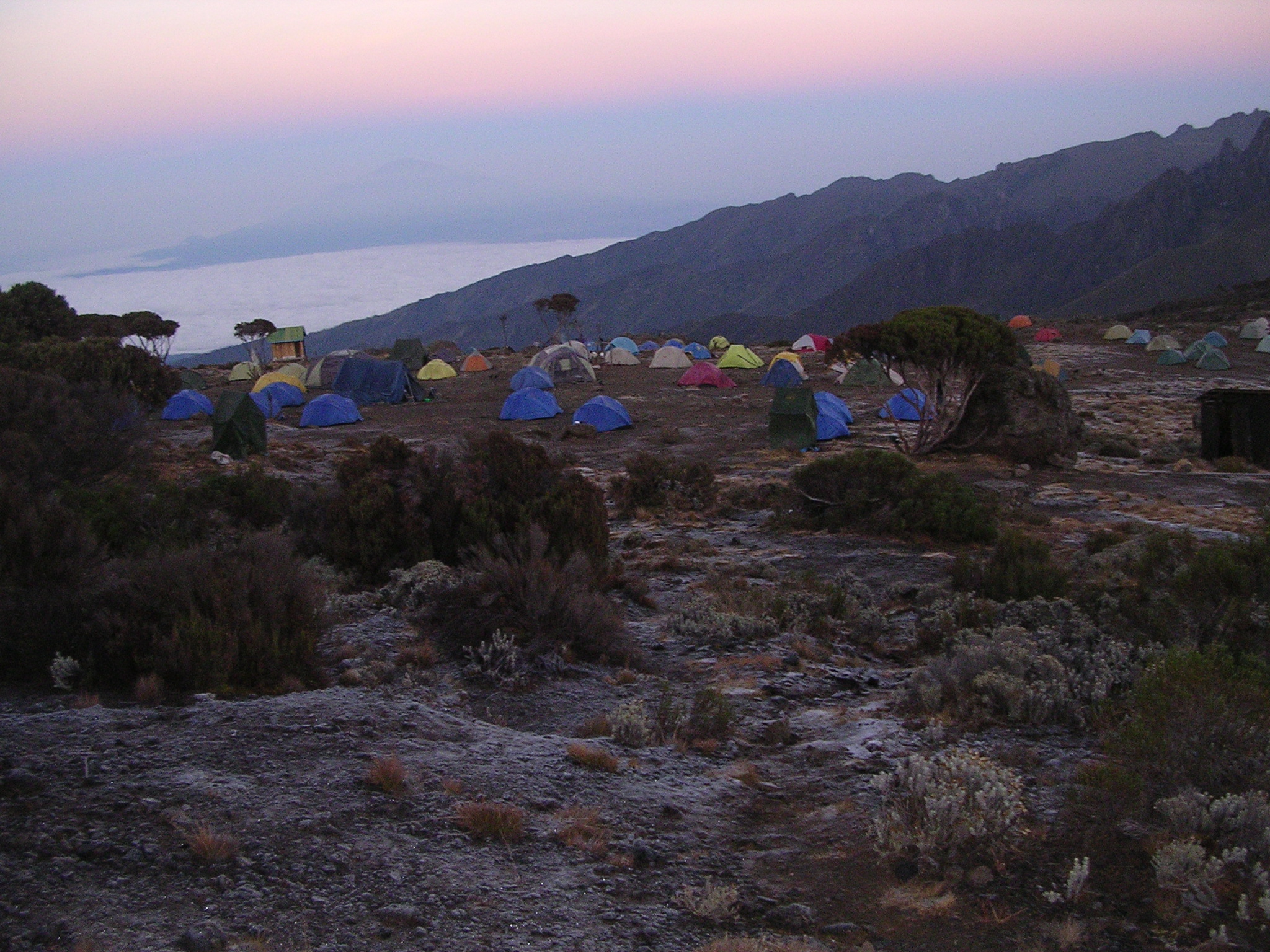
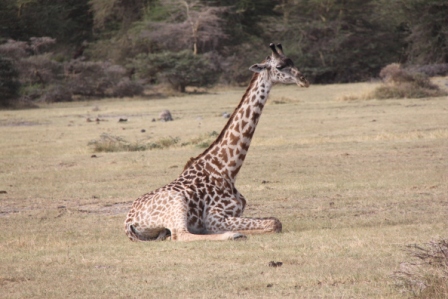
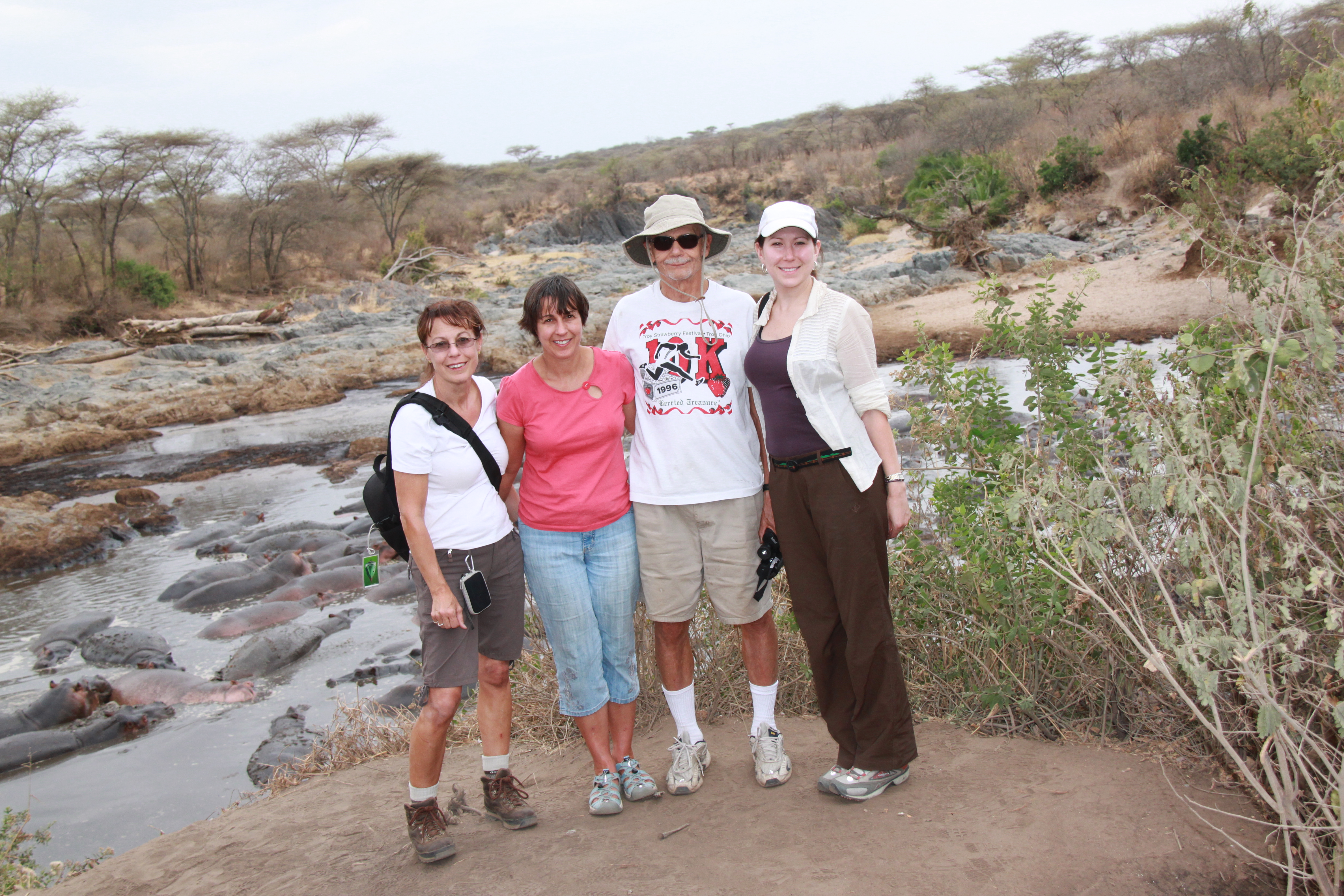
This morn, Thursday, September 2, the 12 Mt. Kilimanjaro climbers departed for their long drive to Moshi. The German party at our camp also departed leaving just the 4 of us for a morning game drive into the Serengeti Park. At the camps entrance was a herd of Tope and Zebra. We took a different route that previously traveled crossing great vistas of plains with the horizon miles and miles away. For the first time the spotting of animals was sparse. We saw Giraffes with 2 males wrapping their necks around the others neck – a sign of aggression our guide Darimo stated. We saw a hyena in her hole hiding babies from sight and we saw herds of Antelope and Hartebeest. We returned to camp for lunch where we found a beautiful salad awaiting us. After a siesta we packed our bags and headed north to the Ikoma area of the Serengeti. We stopped for a break at the hippo pool which had more than a hundred hippos lying on their sides and on top of each other. This is a stagnant water pond that is formed at the meeting of 3 rivers. The behavior of the hippos has evolved due to protection of the calves against crocodiles (we saw 3 on shore) and to accommodate the maximum number of bodies. It was fascinating to listen to them as when they are submerged hippos make a resonant honking call. When they are on land hippos are silent. We reached Ikoma Wild Camp at dusk. It is located just outside the Serengeti in the Grumeti Game Reserve. The camp itself lies between two kopjes (bizarrely shaped rocky inselbergs protruding from the underlying plains). This is a permanent tented camp with 11 tents built on stilts into the rocky hillsides and 10 bandas (traditional round huts) with a large dining tent. We were welcomed with hot towels and coffee.
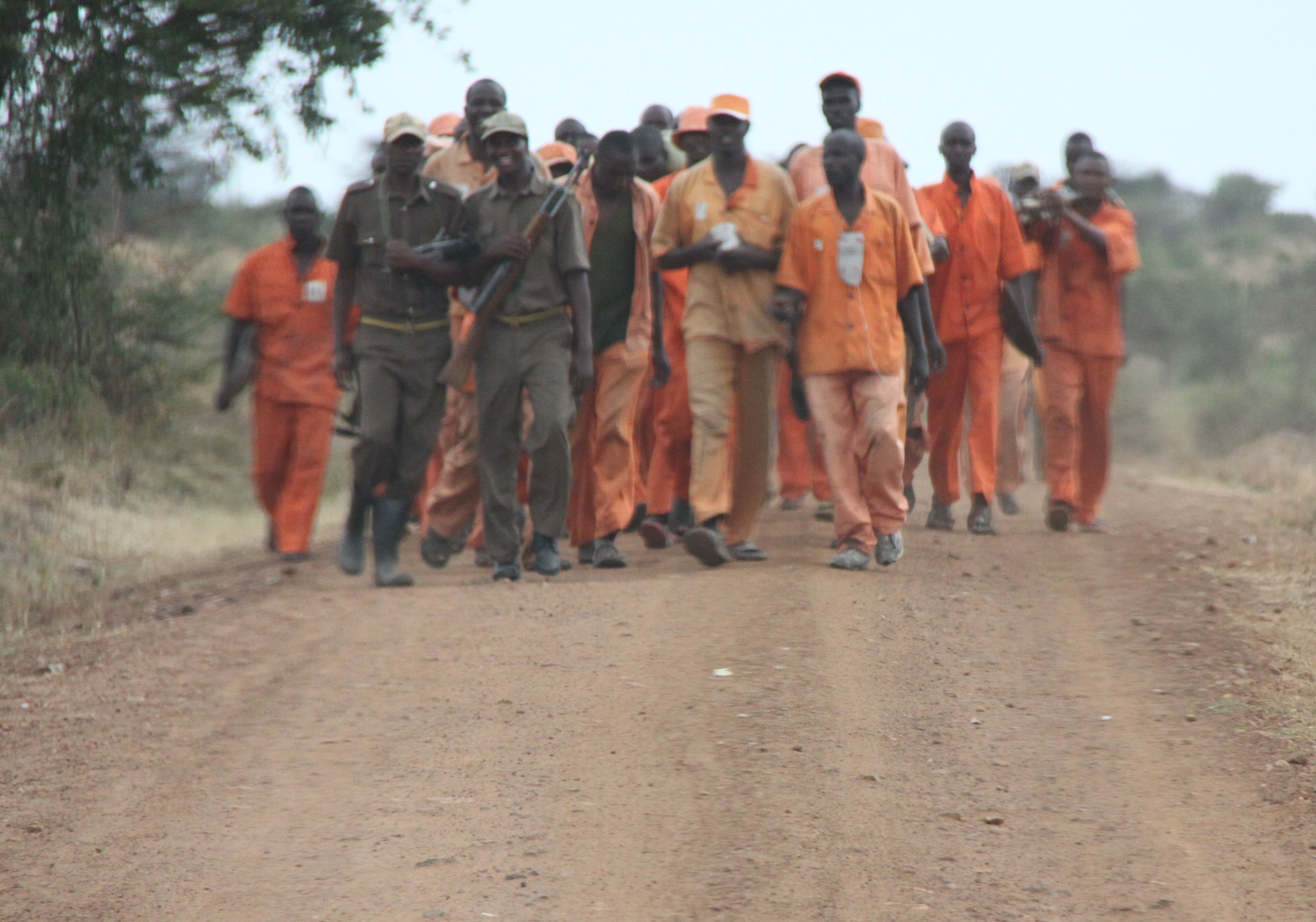
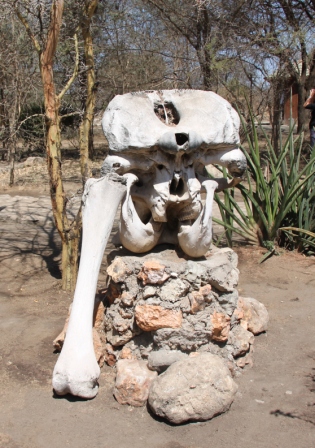
We are off this Friday morning with a box lunch and a quick stop to pick up Ranger John complete with an M-60 gun at the local ranger station. We are headed north to the Tanzania/Kenya border hoping to see the great migration. We will be driving through several villages of native tribes. There are over 120 different tribes in Tanzania. Ranger John is with us as we will be traversing in and out of the Serengeti and through some wildlife reserves and hope to cross into Kenya. As we head north the terrain becomes hilly and rocky, the plains are gone. This area is quite agricultural as we see fields of Cassava and Aloevera bordered by Cissel (the rope plant). We see our first elephant skull. We reached the Mara River and the crossover to Kenya. The Ranger station at this junction has posted a “no crossing” warning as the water is washing over the road is fast and deep. No vehicles will be allowed to cross today. So we settled on the banks of the river for lunch watching crocodiles and hippos and storks. There are no wildebeest or zebra at this area of the river. On our return to Ikoma we see sugar cane. We met a young camp volunteer from Germany. Natasha is 19 years old and preparing to go to University. She has traveled Europe with her parents and spent a year in Australia as an exchange student. Now she is at Ikoma for a month doing all the same chores as any camp trainee would. Yesterday she was on greeting duty, today the kitchen. During her month here she will get out on safaris about 4 times in addition to learning how the camp works and learning Swahili.
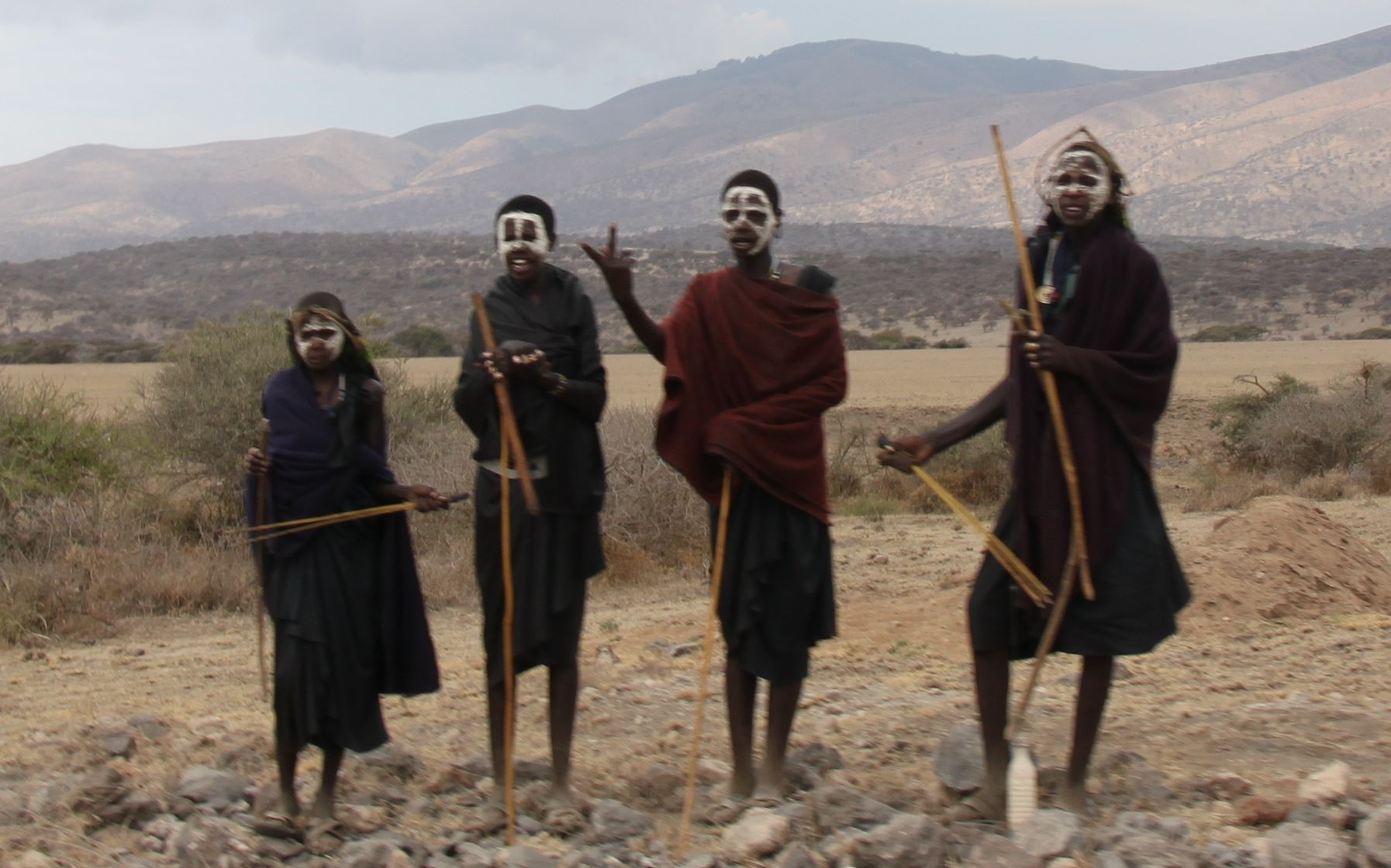
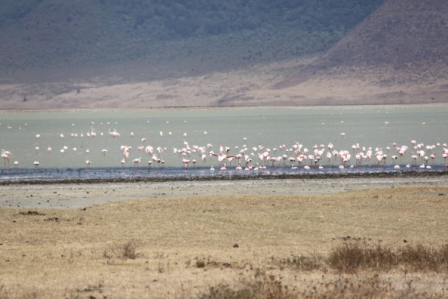
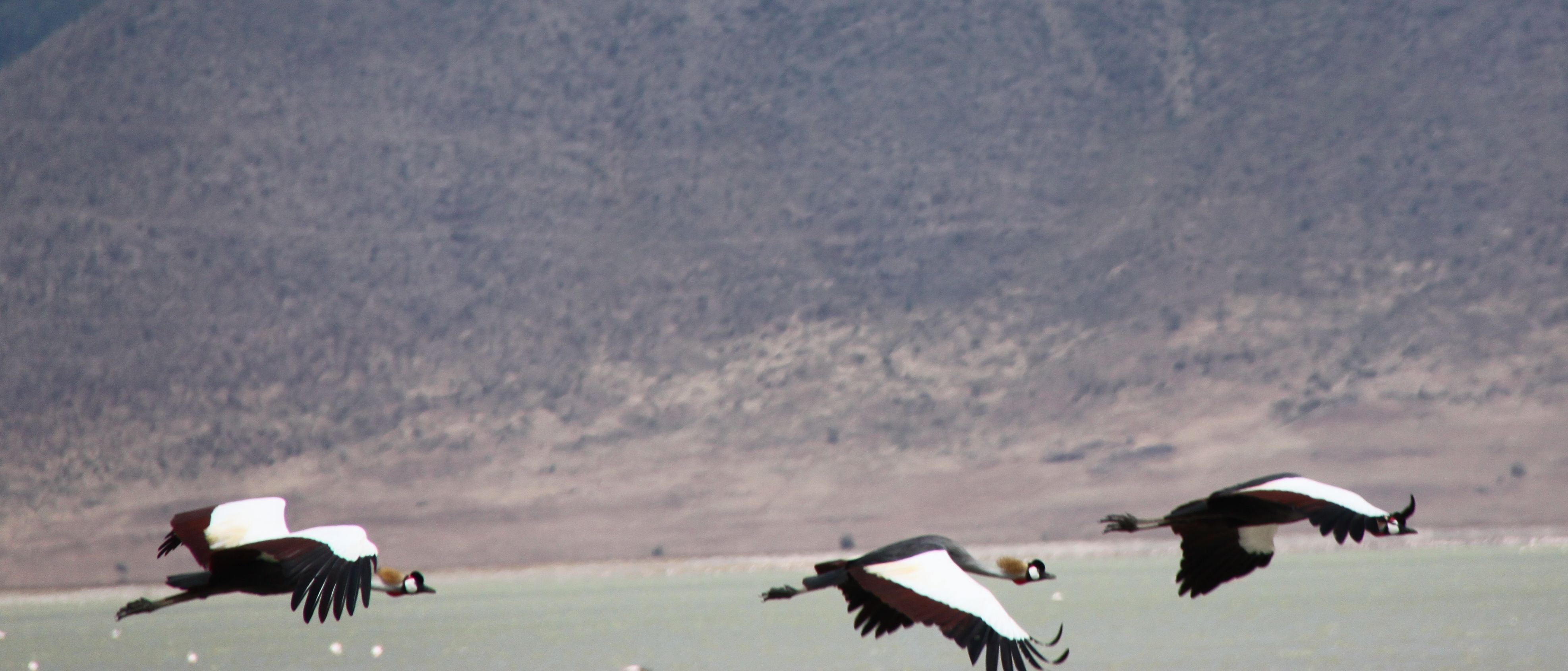
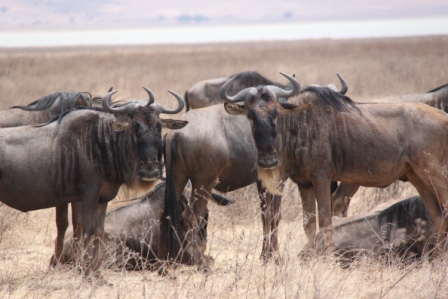
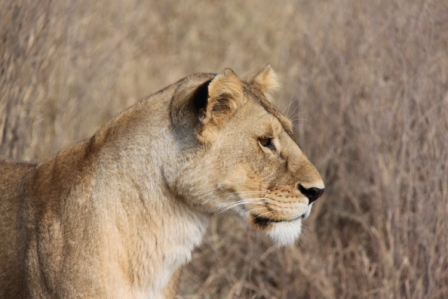
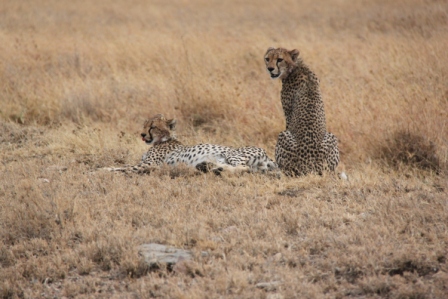
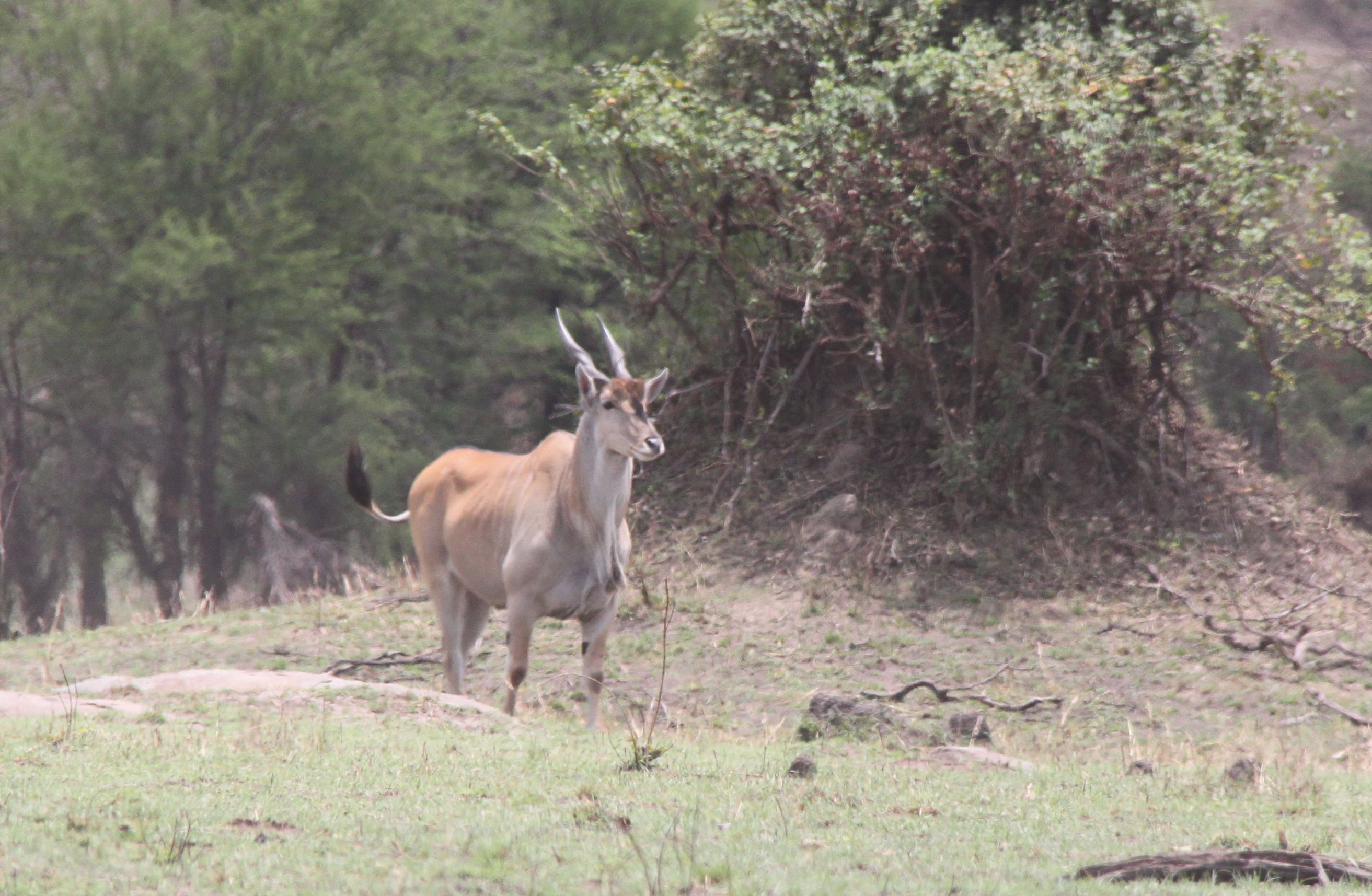
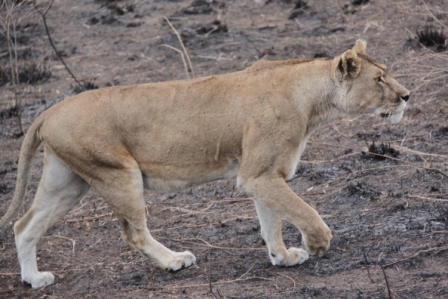
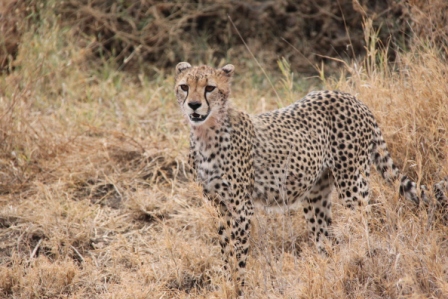
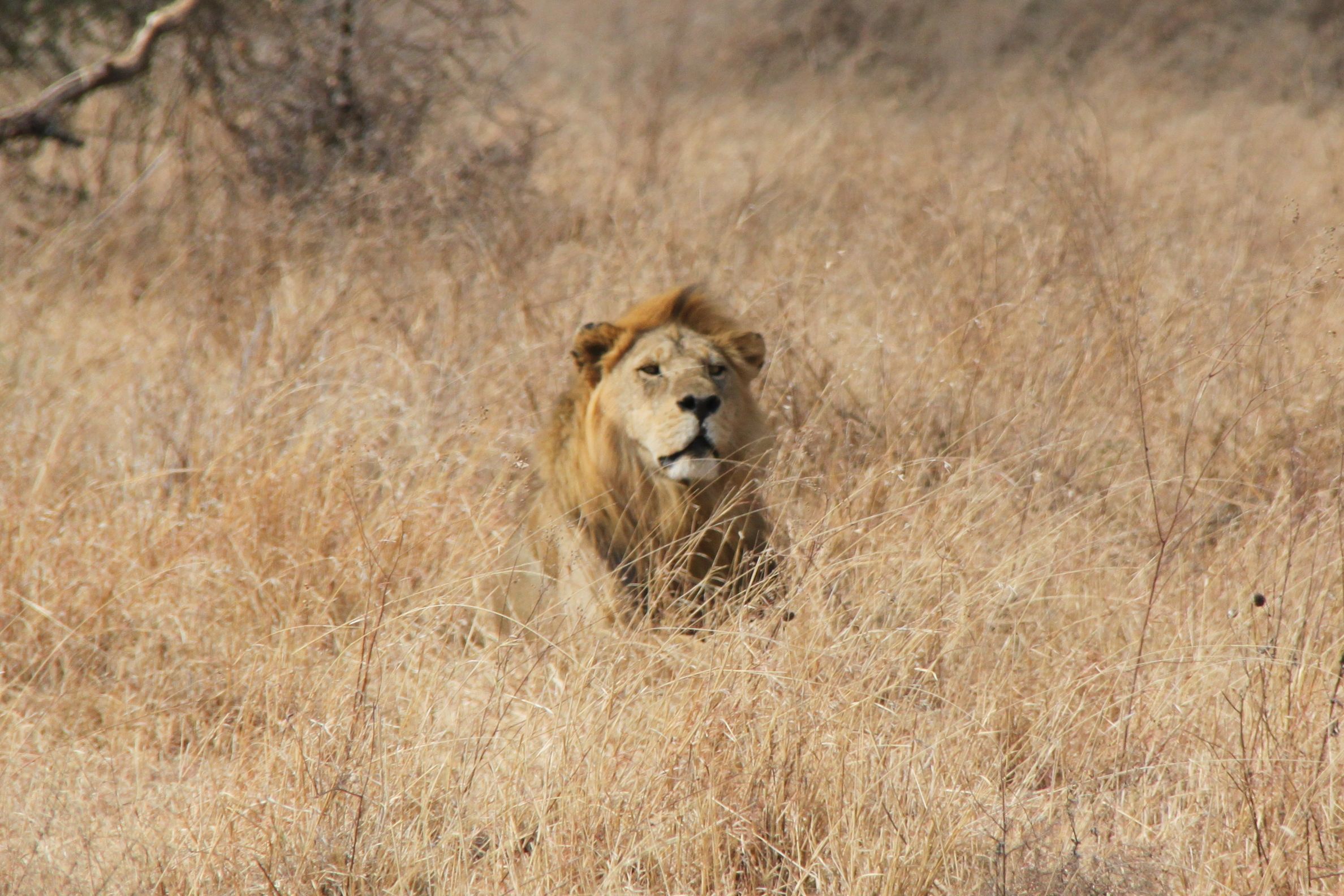
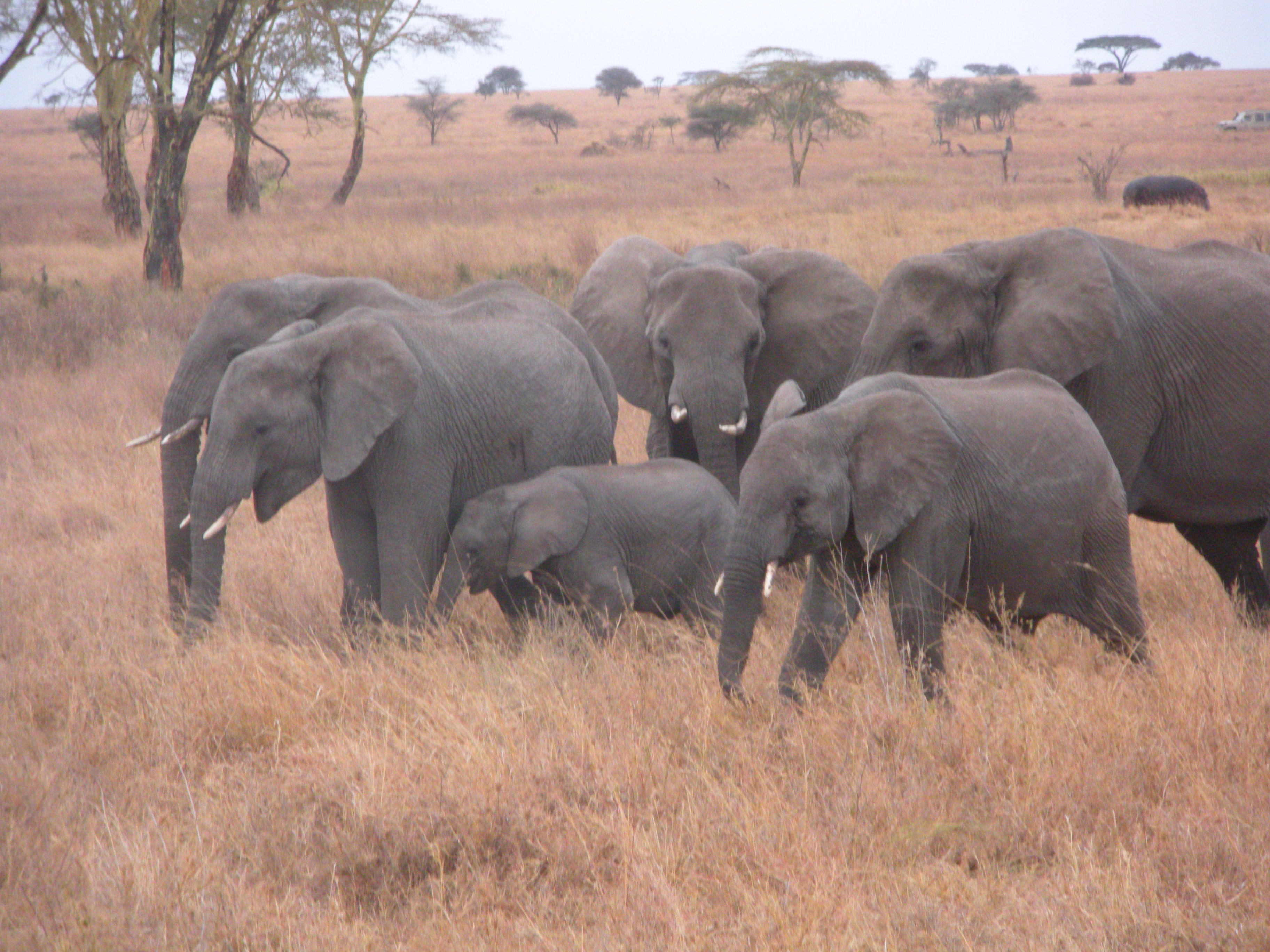
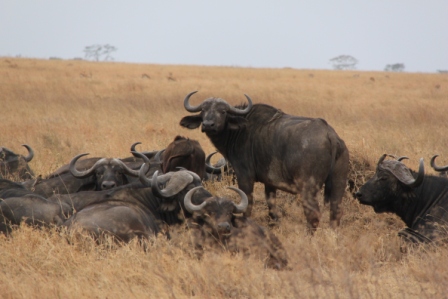
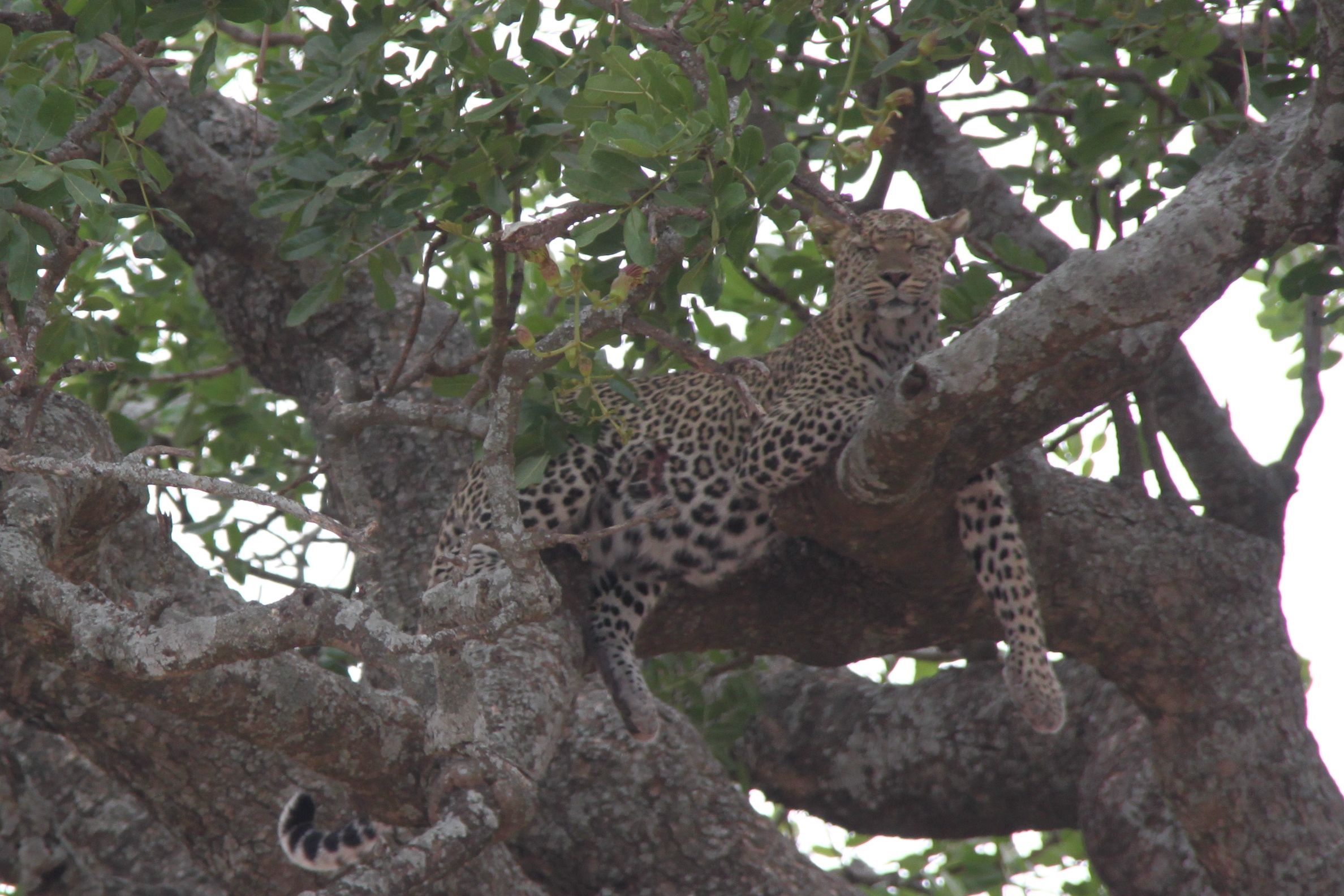
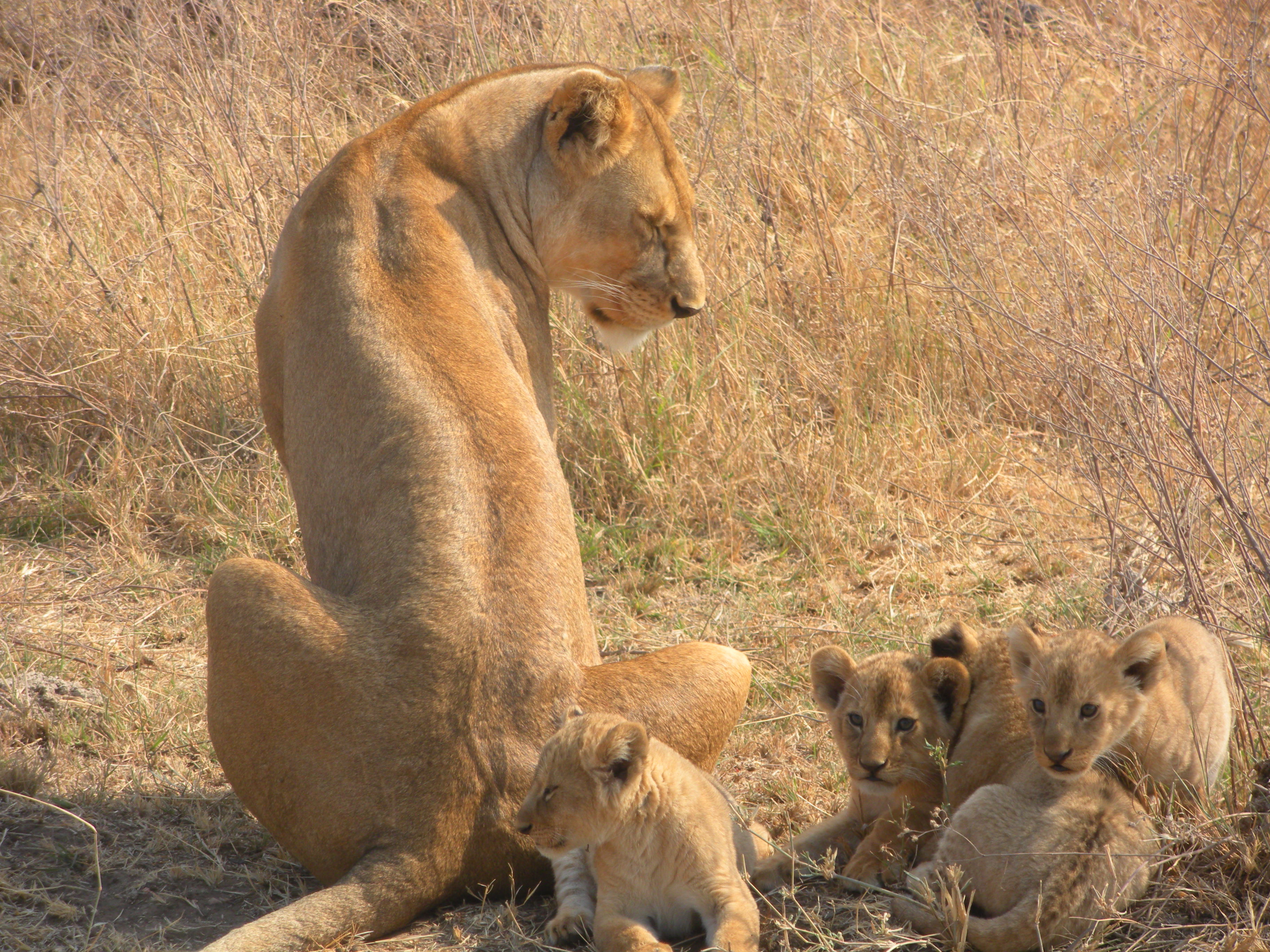
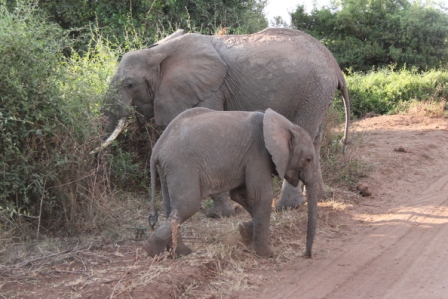
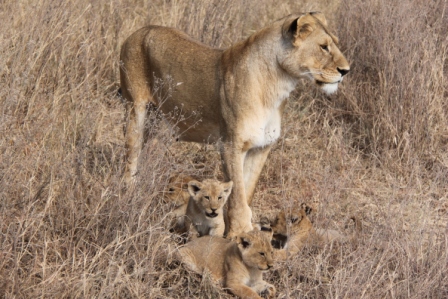
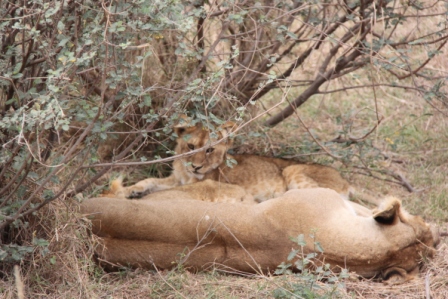
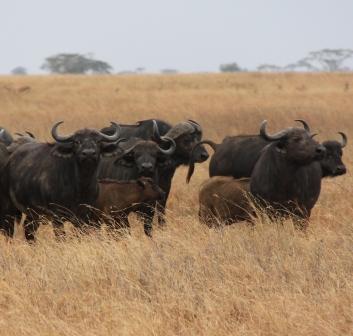
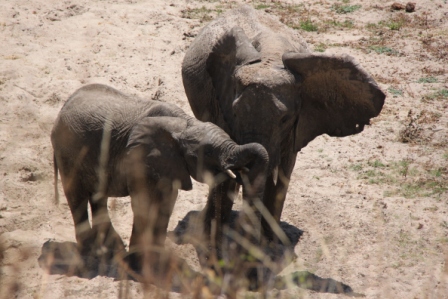
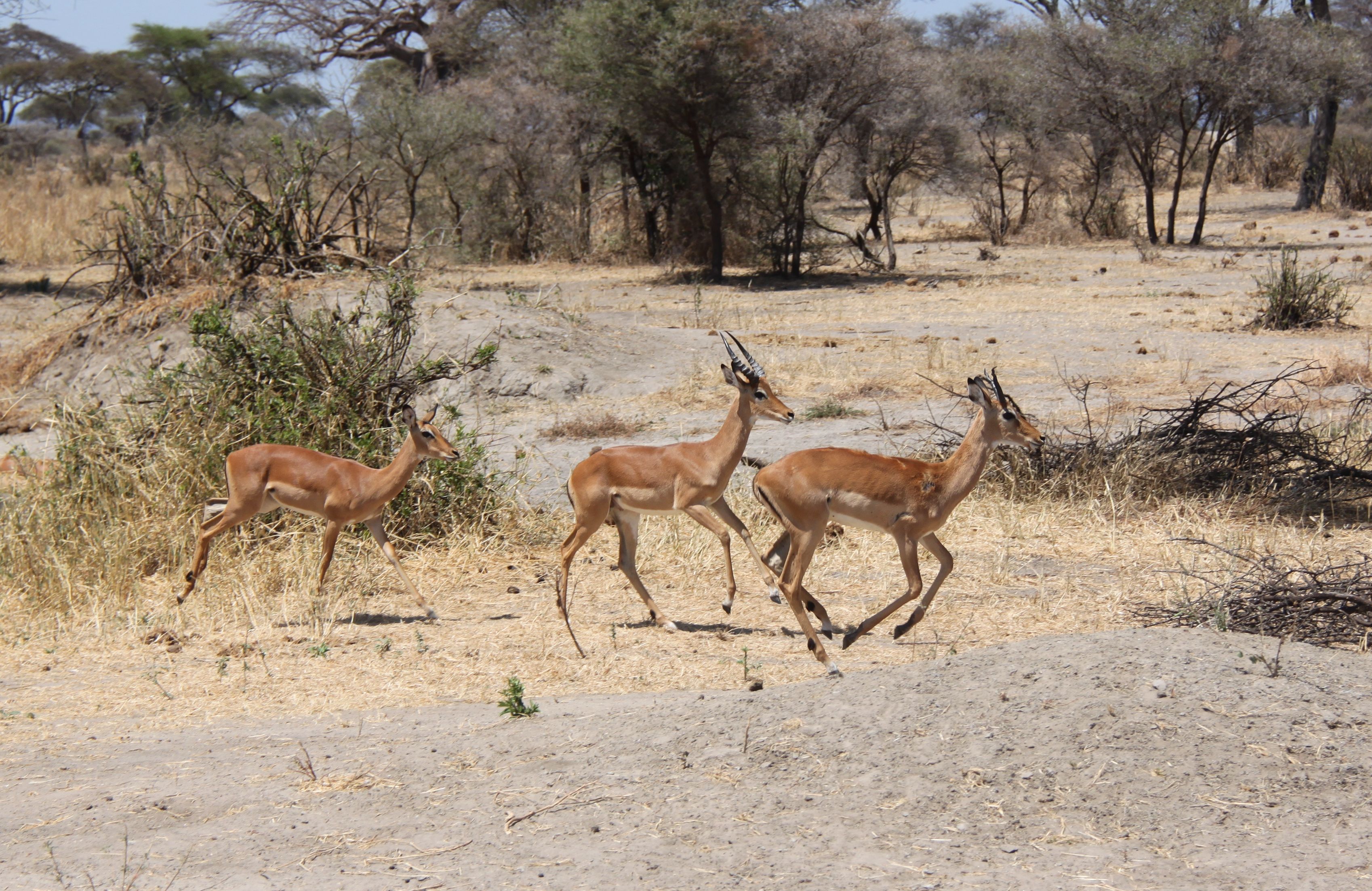
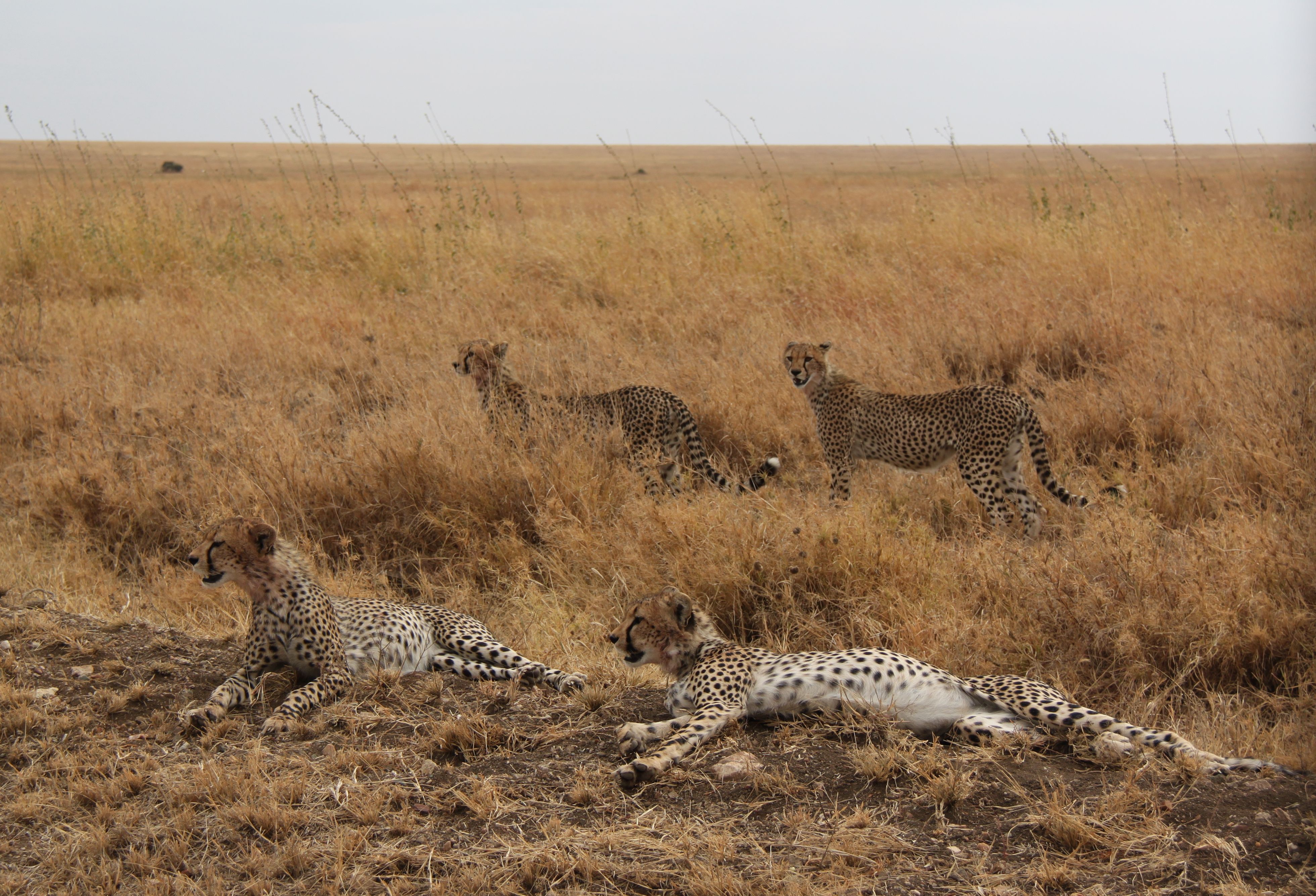
Saturday begins with a game drive traversing in the Serengeti. We are greeted by a Black Back Jackal, the first this safari. The big surprise was the sighting of a cheetah and her 4 adolescent cubs. Mom hid under dense scrub brush and a tree while watching her 4 cubs. We watched her cubs inspect our vehicle before lying in the sun. We watched them for at least 30 minutes and were so pleased with this find. Then 5 minutes later we spotted a lioness with 2 cubs. Out in the middle of nowhere the car suddenly made a loud metal dragging sound. Upon stopping we discovered a weld that held the running board on had broken and was dragging. There were no other people or vehicles around so AJ and Darimo assessed the issue and ended up using AJ’s luggage strap to tie the running board up and hooking the luggage strap to the front passenger seat belt and down the road we went. We passed Massi warriors (young men ages 14-17) with white painted faces and ceremonial dress. They were headed off to their circumcision ceremony. A few hours later we arrived at the top of a sunny Ngorongoro Crater. The view is breath-taking and the road down steep. It is 2000 feet to the crater floor. The entire crater is a conservation area with no residents or lodges and is a world heritage site. Ngorongoro Crater is the largest unbroken ancient caldera nearly 3 million years old. Once in the crater we saw fox, water buffalo, cranes, hyenas, flamingos, zebras, wildebeest, gazelles, impalas, elephant’s, eland and a variety of birds. While some of the animals migrate in and out of the crater the majority of them live in the crater year round. It was very windy in the crater and because of the wind we never saw a rhino which was rather disappointing. We ate lunch in our vehicle as the fish eagles by the lake like to dive and take people’s food. As were preparing to depart we were lucky enough to find a lion and lioness mating. We celebrated our day with drinks and popcorn at the Highview Hotel.
September 5, 2010 Sunday
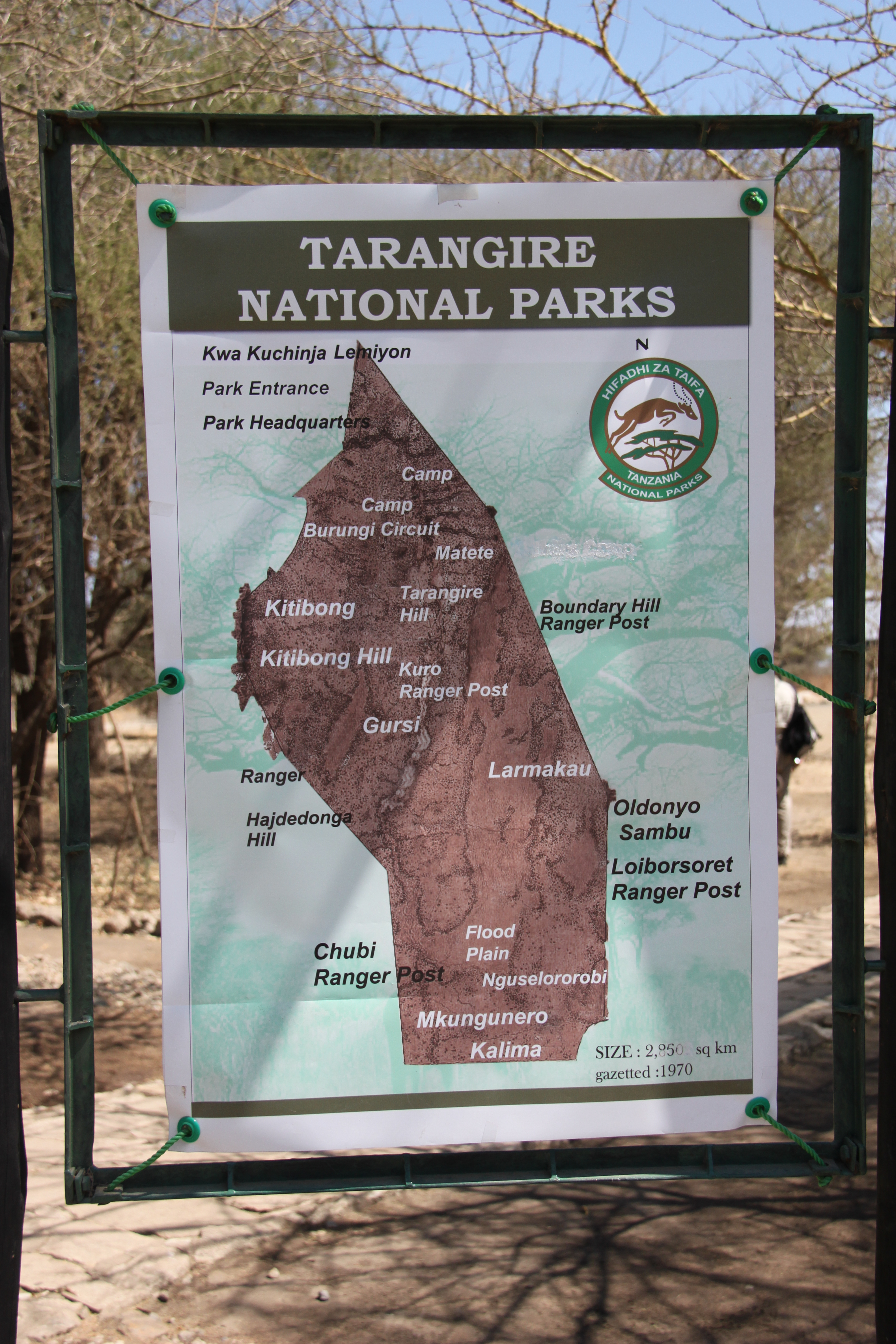
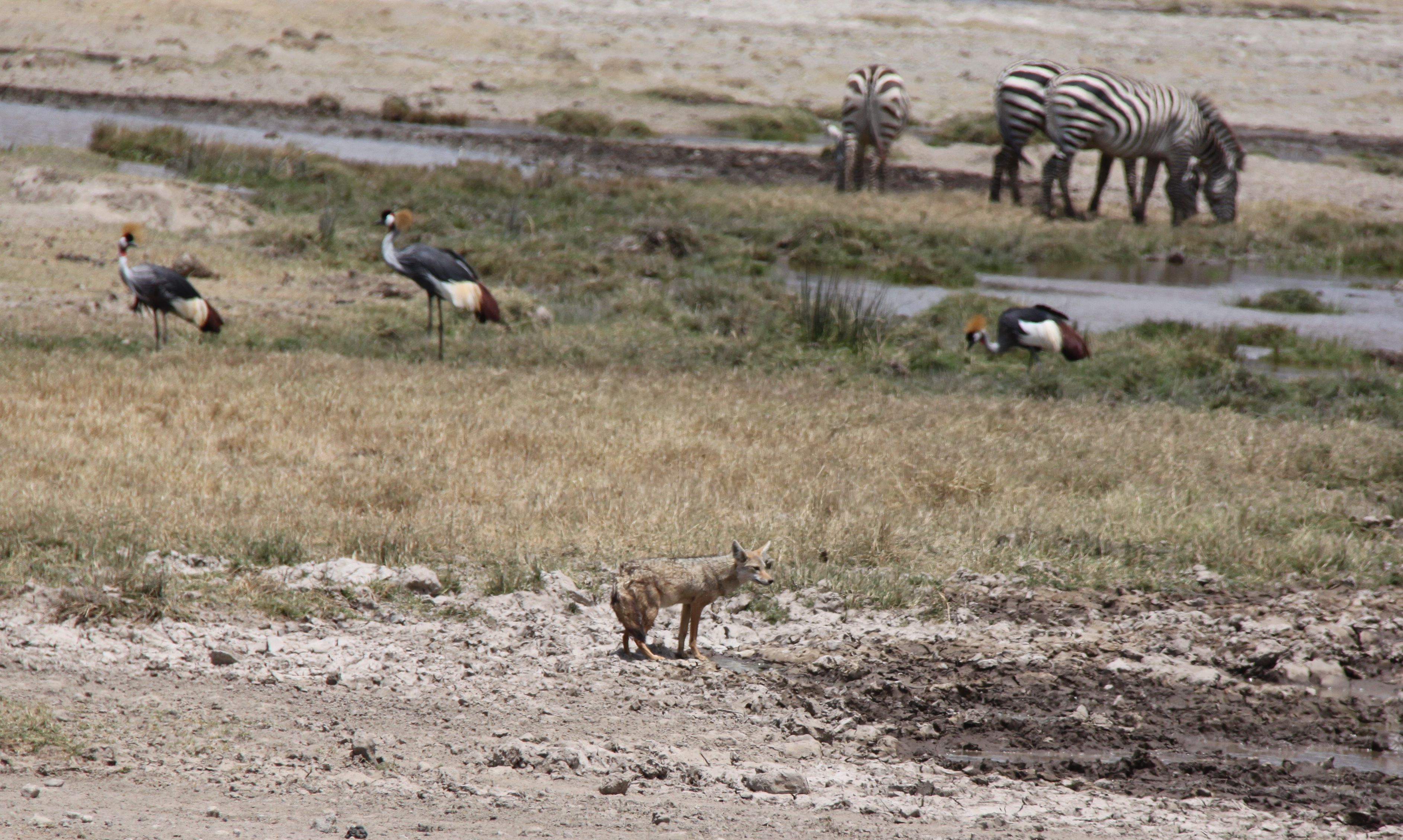
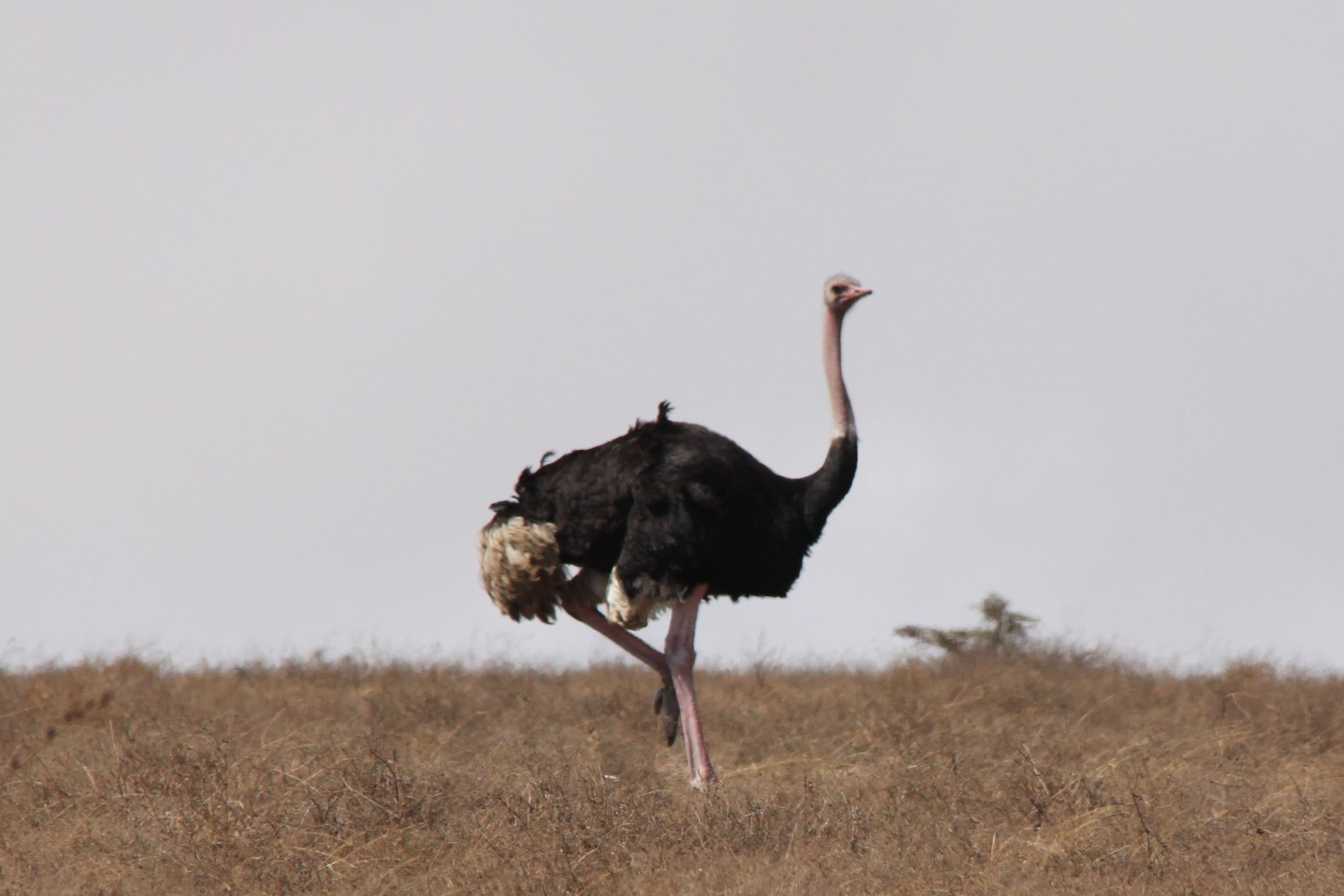
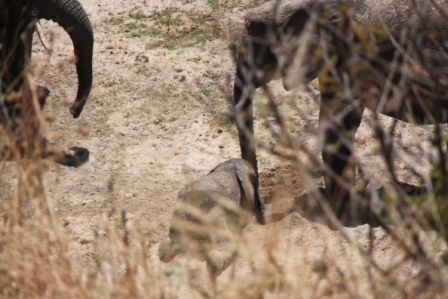
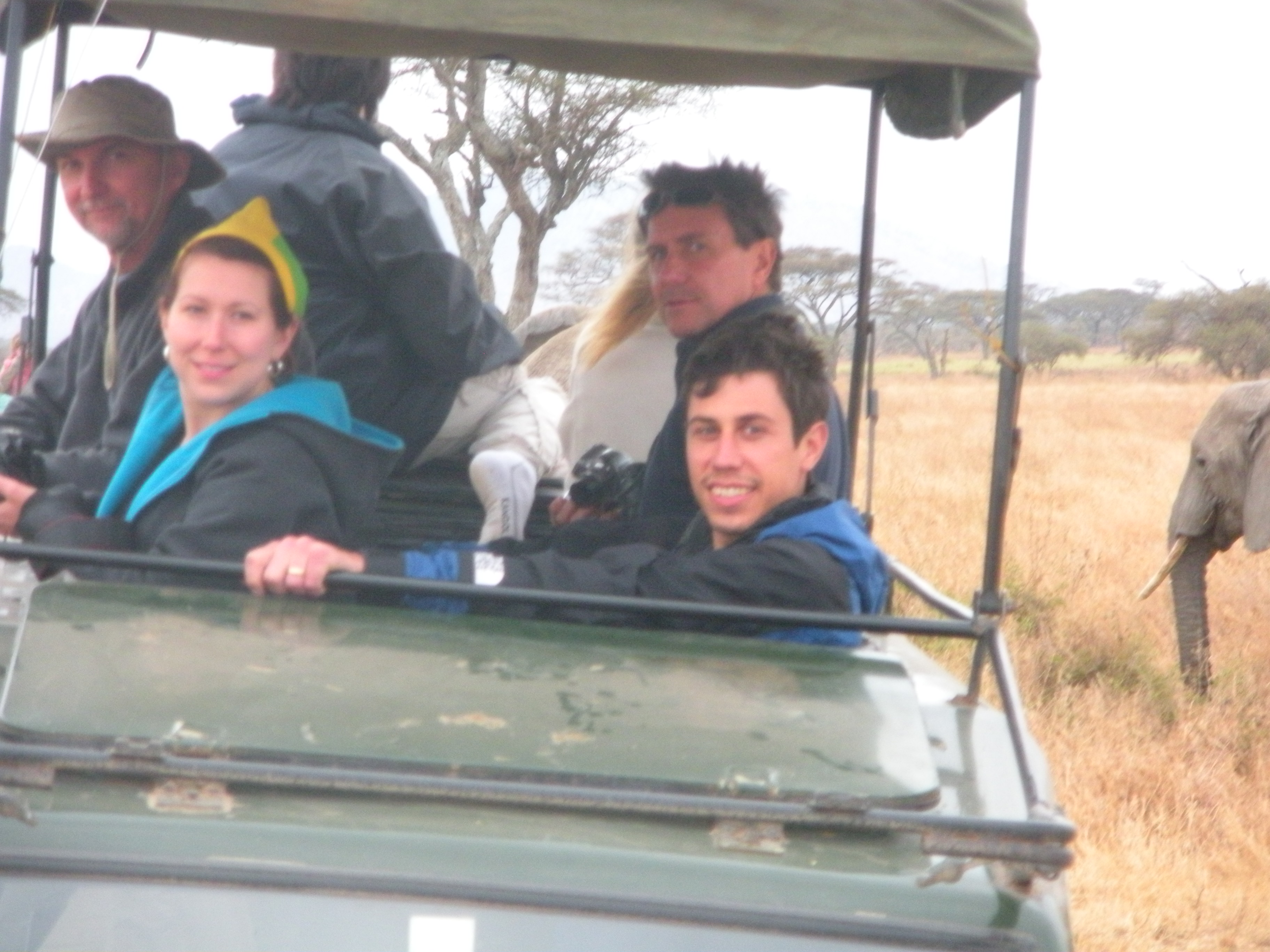
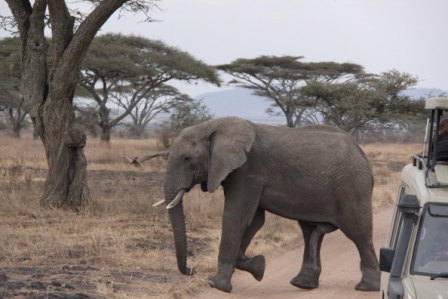
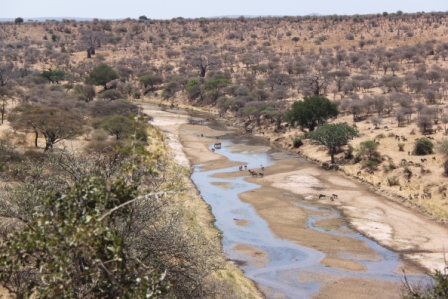
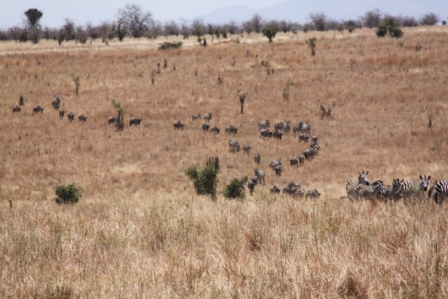
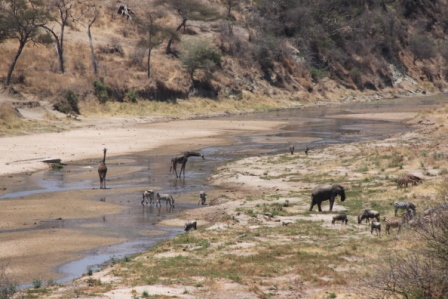
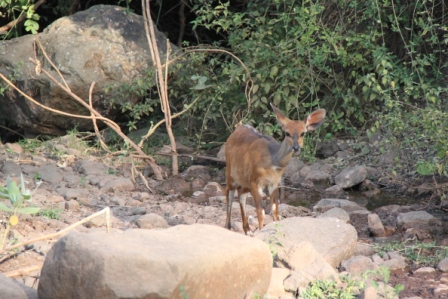
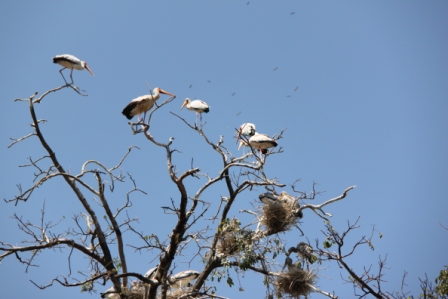
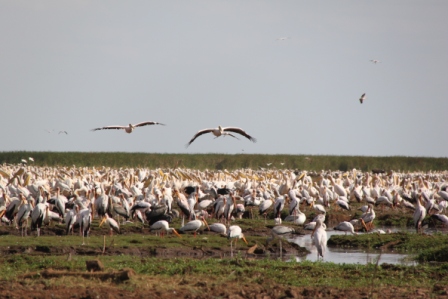
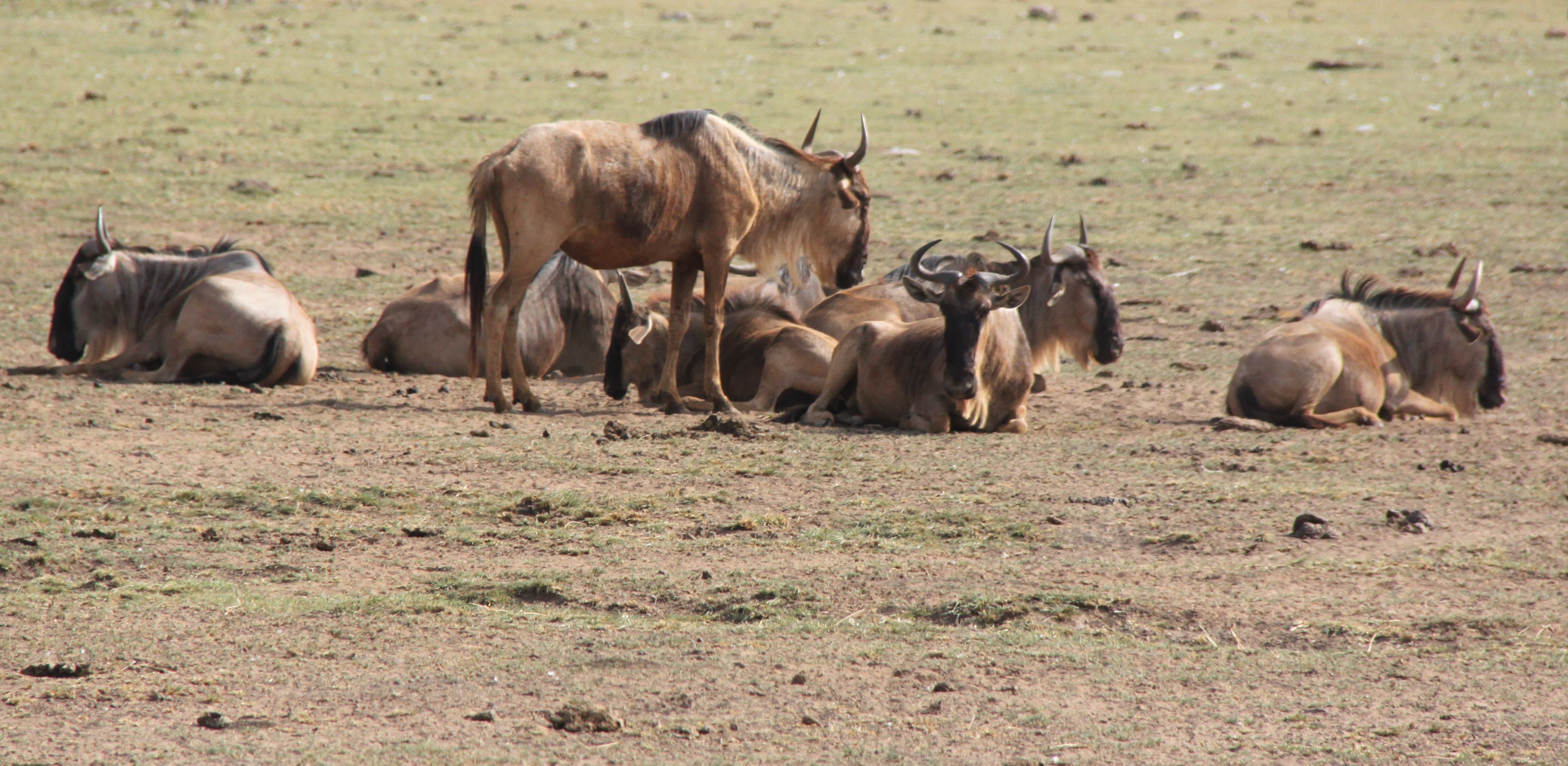
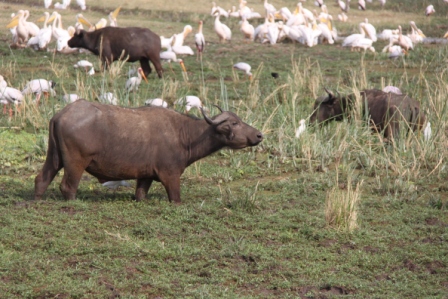
This morning we were greeted by Darimo who has repaired the car and presented a clean luggage strap to AJ. We headed off to Tarangire River and Park stopping at the Lake Maryara overlook to snap pictures. Tarangire National Park is fiercely hot with dusty red roads and dried straw grasses. The wildlife here is migrating to the water. It was so cool to witness a line of zebra and wildebeest snaking from the horizon to the front of our vehicle as the animals crossed to get to the river; a constantly moving line of animals. This park has the greatest concentration of wildlife outside the Serengeti. It is here we saw storks, vultures, turkeys, and the kori bustard (the heaviest flying bird). We saw massive Baobab trees and lots of tsetse fly (annoying biting things!).